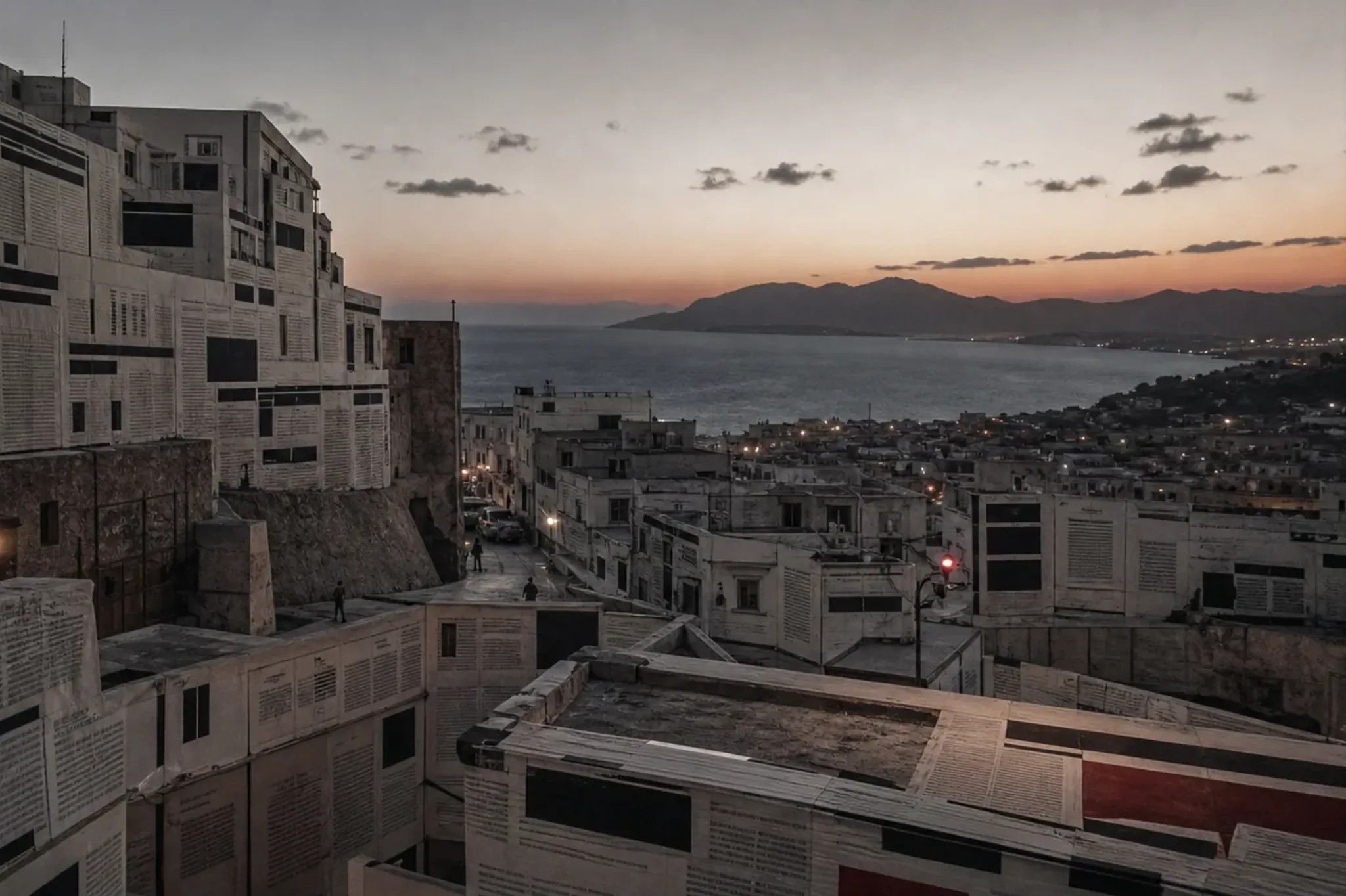
Les kiosques de Ceuta vendent encore les mêmes titres. El Faro de Ceuta. El Periódico de Ceuta. Ceuta Actualidad. Ceuta al Día. La Verdad de Ceuta. En juillet 2026, on y lisait une ville. Le football. Un timbre neuf. Le cinéma d’été. Un conflit du travail. À la fin du mois, la ville n’occupait plus la page. C’est la page qui occupait la ville.
Une crise ne se contente pas d’arriver. Elle apprend à la ville les mots avec lesquels raconter ce qui est arrivé.
Avant que Ceuta n’occupe toute la page
Le 2 juillet 2026, El Periódico de Ceuta sort un chiffre. Il aurait dû faire lever la tête.
Du 1er janvier au 30 juin, 2 582 personnes étaient entrées à Ceuta par voie terrestre, hors procédure. En 2025, sur la même période : 978. Soit 164% de plus.
Ce n’était pas encore l’image des écrans. Pas un matin unique, à Tarajal, avec des dizaines de milliers de personnes. Un chiffre. Puis un autre.
Le 16 juillet, El Faro de Ceuta avance 2 826 arrivées terrestres depuis janvier, contre 1 133 un an plus tôt. 149% de plus.
Le vocabulaire tient du formulaire. Presión migratoria — la pression migratoire. Arrivées. Frontière. CETI, le centro de estancia temporal de inmigrantes, le centre d’accueil temporaire. Menores : les mineurs. Des colonnes qui rentrent dans un tableau.
Beaucoup de crises commencent ainsi. Elles n’ont pas encore de nom.
L’alerte précède la rupture
Dernière semaine de juillet. Les substantifs durcissent.
Le 26 juillet, El Faro signe un éditorial : l’Espagne et l’Europe doivent bouger, tout de suite. Police, Guardia Civil, CETI, protection de l’enfance : tout cela, écrit le journal, touche au colapso — l’effondrement.
Le 27, le titre va droit au précédent : « Esto puede ser peor que la crisis de mayo ». Le papier décrit plus de 400 personnes hors du CETI, plus de 400 mineurs déjà à loger.
L’archive de Ceuta Actualidad, ce jour-là, n’a rien à voir avec celle qui paraîtra trois jours plus tard. Football. Tourisme. Un timbre. Cinéma d’été. Conflits du travail. Et, déjà, entre deux sujets de saison : plus de personnel au CETI, des consignes plus nettes pour la Guardia Civil, une réunion d’urgence entre la ville et la délégation de l’État.
Dans une archive, une montée se voit comme ça. La crise n’a pas encore mangé la page. Elle la coupe.
Ça s’emballe
Le 28 juillet, El Faro raconte encore une nuit de mer. Titre : « Una auténtica locura. » Une vraie folie. Toute la nuit, ça n’avait pas cessé. Chez la Guardia Civil, le sentiment : ça n’a pas de frein.
La Delegación del Gobierno avait donné, le 27, le chiffre officiel : environ mille arrivées en sept jours. El Faro le reprend au matin.
Le 29, les mots bougent encore. Ceuta Actualidad : Ceuta, al límite. Un autre papier : La tragedia se agrava. Plus de cent personnes ont gagné Ceuta à la nage dans la nuit. On ignore où sont les autres.
El Faro, ce matin-là, voit des centaines et des centaines dans l’eau. À 10 h, services espagnols et marocains ont récupéré à peu près mille personnes. Le lendemain, El Periódico de Ceuta place les sauvetages du mercredi au-dessus de 1 200.
Le soir, la ville demande déjà un autre étage de réponse. Ceuta n’est pas encore une une internationale. L’archive locale, elle, contient déjà l’avant.
Le 30 juillet
07 h 25, le 30 juillet. El Faro envoie un papier depuis la frontière. La Guardia Civil est débordée. Les tentatives ont duré toute la nuit. Le journal parle de désastre, de limite, d’une situation désespérée.
Puis les mots ne suivent plus l’échelle.
Dans la journée, on dit d’abord des milliers. Reuters reprend des estimations locales et de TVE : 2 000–3 000, 200 policiers spécialisés, 60 militaires. Ceuta al Día tient un fil en direct. L’en-tête se fige à 20 000, d’après des sources syndicales et policières.
Matin du 31 juillet — El Correo le situe peu avant 10 h. Le Departamento de Seguridad Nacional publie une estimation venue de l’Interior : plus de 49 000 entrées en 24 heures. Puis retire le texte. Le 3 août, El País raconte le limogeage d’un responsable de la sécurité pour avoir informé de ce 49 000.
Vers 13 h 30, Juan Jesús Vivas parle d’environ 60 000.
En fin d’après-midi, premier bilan public que l’Interior garde : environ 50 000 entrées, 48 300 déjà renvoyés — à peu près 96% de ce stock-là.
Le 4 août, l’Interior pose le chiffre sur deux jours : 72 000 entrées, dont environ 70 000 déjà sortis.
Le 25 août, Ángel Víctor Torres dit au Conseil des ministres que plus de 70 000 personnes sont entrées les 30 et 31 juillet, dont 90 à 95% renvoyées en 24–48 heures.
Reuters, le 28 août, écrit « at least 72,000 » « on July 30 ». Interior et La Moncloa disent les 30 et 31 juillet.
Frontex écarte Ceuta de ses détections de janvier–juillet 2026.
Un fil en direct est fait pour dire ce qui se passe maintenant. Une crise peut courir plus vite que le savoir.
Toutes les rubriques, une seule affaire
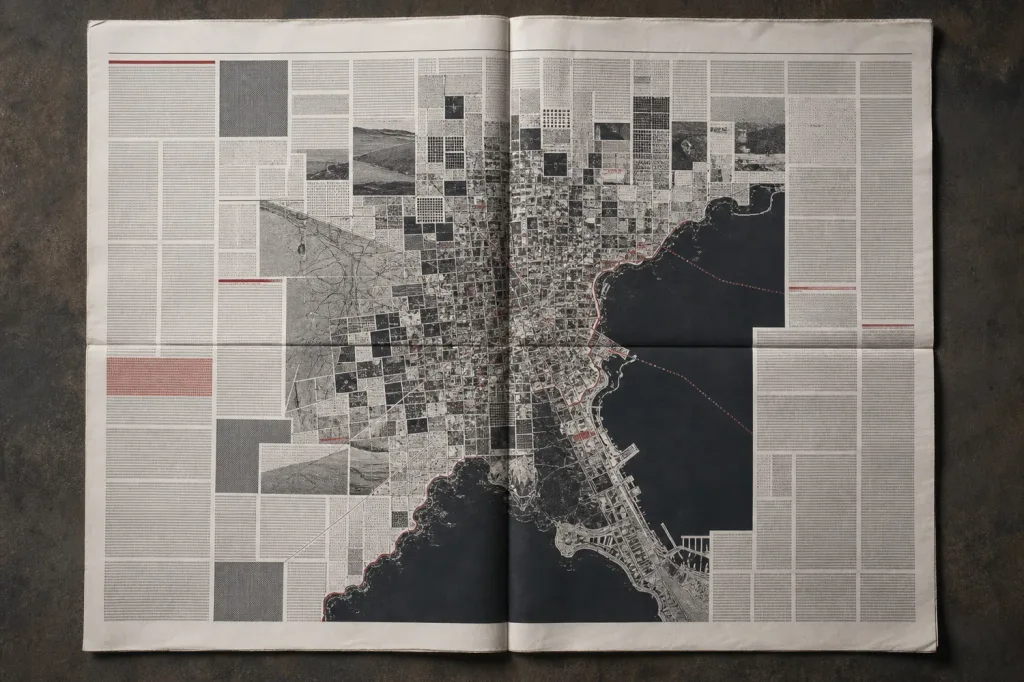
L’archive de Ceuta al Día, le 30 juillet, est parlante. La crise n’habite plus une rubrique « migration ». Elle passe sous Sucesos. Puis Administración. Puis Política. Economía. Salud. Police. Armée. Hôpitaux. Commerces. Gouvernement. Manifestations. Syndicats. L’assemblée de la ville.
Les cloisons du journal tombent parce que le même événement est entré dans chaque service.
Ceuta Actualidad fait le même mouvement. Le 30 juillet : troupes, frontière, magasins fermés, santé, administration, manifestations, rumeurs, port, réponses politiques, et un groupe WhatsApp qui aurait poussé à frapper des migrants.
Au milieu, pourtant, un autre papier : Ashal, 20 años, el rostro de una generación que cruza a Ceuta persiguiendo un sueño. Un court portrait, à la troisième personne. Pas un porte-parole.
La place de ce texte compte. Un événement de masse transforme les gens en échelle. Vingt mille. Quarante-neuf mille. Soixante-dix mille. La personne s’efface presque toute seule. De temps en temps, le journalisme lui rend un visage.
Les deux gestes sont nécessaires. Il faut la taille. Il faut aussi se souvenir que, dans le chiffre, l’unité est quelqu’un.
Les mots ne sont plus les mêmes
Avant la rupture, le langage reste technique. Presión. Capacidad — la capacité. Accueil. Menores. Moyens.
Fin juillet, un deuxième lexique s’installe. Crisis — la crise. Colapso. Chaos. Descontrol — la perte de maîtrise. Ces mots parlent encore d’un système.
Puis un troisième lexique. Avalancha — l’avalanche. Ataque — l’attaque. Chantaje — le chantage. Invasión — l’invasion. Ces mots parlent d’un adversaire.
Un centre saturé, c’est un problème de capacidad. Une invasión, non. Une invasión suppose un envahisseur.
Une crisis demande : comment rétablir le système ? Une invasión demande : qui nous attaque ?
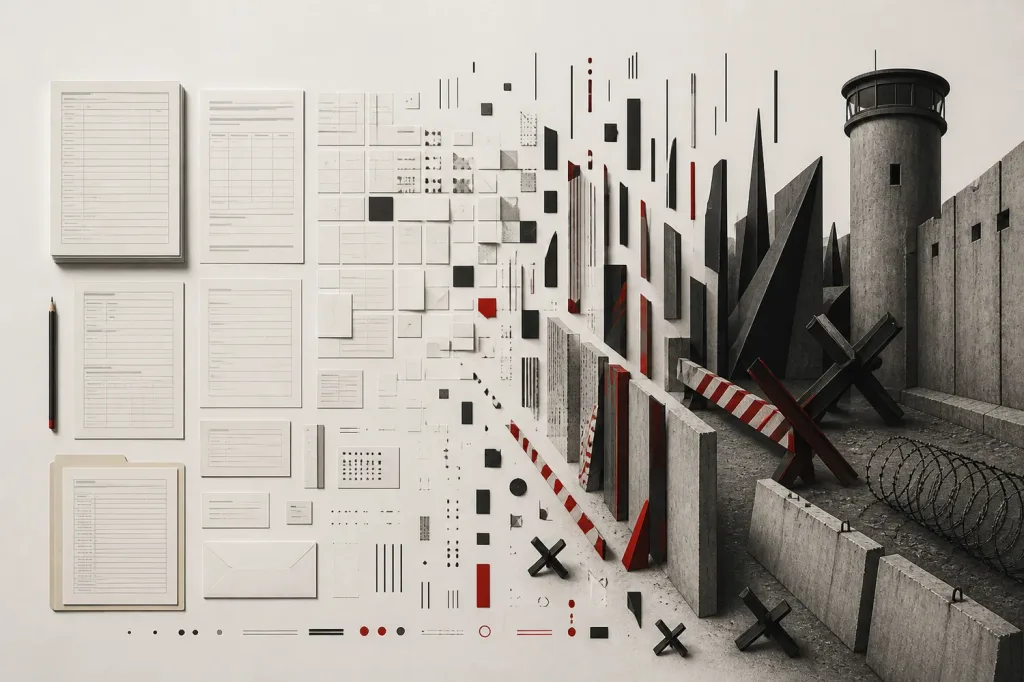
La suite dépend de ce vocabulaire. On ne répond pas de la même façon à deux descriptions.
Qui parle, dans quel encadré
On pourrait chercher invasión dans la presse de Ceuta, compter, et conclure que les journaux ont basculé dans un lexique anti-migrants. L’archive refuse ce raccourci.
Le 30 juillet, Ceuta al Día met le mot dans un titre : il vient d’une exigence de l’UGT sur la sécurité d’urgence. Ce n’est pas, par magie, la ligne du journal.
Plus tard, le mot entre vraiment dans l’opinion et l’éditorial. Le 25 août, El Faro publie une tribune : il faut dire invasión, pas crise migratoire. Le 29 août, l’éditorial d’El Faro emploie le terme, tout en demandant l’unité politique à Ceuta.
Citer n’est pas signer. Une tribune n’est pas un reportage. Un éditorial n’est pas une brève. Si on fusionne les encadrés, on invente une presse plus simple que le papier. Une lecture sérieuse laisse les étiquettes collées.
Le journal, capteur de quartier
Le journalisme local devient indispensable pour une raison simple. Un quotidien national voit une crise de frontière. Un quotidien de Ceuta voit un trottoir, devant un commissariat, rempli de menores. Quelle plage est devenue un camp. Quel magasin a baissé le rideau. Quel quartier descend. Quelle rumeur court sur WhatsApp. Quelle unité n’a pas dormi. Quel élu est venu. Lequel n’est pas venu. Quels détritus restent sur le sable le lendemain.
Le journal du lieu a un grain que le récit national ne tient pas. Capteur précieux. Et gênant : il mesure un système depuis l’intérieur.
Le journal dans la boucle
Ceux qui lisent El Faro, Ceuta Actualidad, Ceuta al Día, El Periódico de Ceuta et La Verdad de Ceuta ne regardent pas de loin. Ils sont la ville.
Un titre sur l’insécurité peut décider quelqu’un à rester chez soi. Un papier sur un lieu d’hébergement peut être lu par le voisinage. Un reportage sur une agression peut entrer, une heure plus tard, dans un discours. Une rumeur peut faire descendre une manifestation. La manifestation devient un article. L’article sert de preuve que la tension monte. La rumeur suivante trouve un terrain déjà prêt.
Le journal n’a pas créé le premier événement. Une fois l’événement là, l’information fait partie du milieu où il continue.
La boucle : événement → reportage → perception → conduite → nouvel événement → reportage.
Toutes les boucles ne cassent pas. Un reportage exact arrête une rumeur. Une photo fixe ce qui s’est passé. Un rectificatif réduit le flou. Un portrait défait un peu l’abstraction d’un chiffre. L’information peut calmer un système autant que l’agiter. Dans les deux cas, elle est dedans.
La peur entre au journal
Mi-août, la traversée n’est plus le seul sujet. La crise a gagné l’intérieur des rues.
Ceuta Actualidad publie une tribune : El mapa del miedo: lo que de verdad siente Ceuta. L’argument ne part pas des statistiques. Il part d’habitants qui décrivent ce qu’ils voient devant chez eux, et la peur d’entrer dans l’espace public.
Cette anxiété a un sol. Des milliers de personnes sans hébergement. Des services sous une pression extraordinaire. Une police étirée. Des quartiers qui absorbent des décisions qu’ils n’ont pas prises. Balayer cette peur sous prétexte qu’on peut l’exploiter politiquement, c’est de la paresse. Dans la même ville, pourtant, une autre peur s’accumule.
L’autre rive de la même plage
Le 3 août, El Faro reprend le récit de l’Asociación Elín, à la Playa del Trampolín : plusieurs jours sans accès réel à la nourriture, plus de mille personnes sans eau potable sûre. Cruz Roja dira plus tard que les kits alimentaires officiels ont commencé ce même jour.
Le 10 août, Ceuta al Día cite Ramses Mohamed, d’Elín : des heures au soleil pour un sac quotidien que l’association juge insuffisant.
Le 16 août, Ceuta Actualidad ne voit plus un rassemblement provisoire. Un campement improvisé. Des pancartes : asile, liberté.
Deux Ceuta, donc, dans le même papier. L’une où des habitants sentent que leur ville se perd. L’autre où des migrants dorment sur le sable et attendent à manger. Les deux peuvent être vraies. On ne comprend pas un système en choisissant la souffrance qui confirme ce qu’on pensait déjà.
La peur se recopie
Le 30 juillet, Ceuta Actualidad signale un groupe WhatsApp, « Viva España », plus de 800 membres, qui pousse à frapper des migrants. Le journal ignore si la police connaît même le groupe.
Plus tard en août : manifestations, accrochages, accusations, faux avis sur l’hébergement, incidents entre migrants, habitants, police et militaires.
Le ministère espagnol de l’Inclusion dit que son système de veille FARO — pas le journal El Faro — a détecté 57 406 contenus de haine sur les réseaux en juillet. Et que ces messages ont triplé les 30–31 juillet : 9 590 ces deux jours-là.
Le chiffre ne dit pas ce que pensait chaque habitant. Il dit plus étroit : le milieu d’information a changé en même temps que le milieu physique. Deux infrastructures, désormais. La frontière. Et le fil.
Les mots se retiennent
Le lexique le plus dur ne grimpe pas indéfiniment. Un contre-lexique apparaît. Calma. Cordura. Convivencia. Unidad.
Le 17 août, Ceuta Actualidad publie un appel au calme et à la coexistence : l’épuisement et la peur sont là, mais Ceuta ne peut pas se casser de l’intérieur. Une autre tribune, le même jour : on ne défend pas Ceuta par l’insulte et la violence.
Le 27 août, José Antonio Carbonell écrit que Ceuta a besoin de calme, pas de plus de combustible, après qu’une fausse rumeur a aidé à provoquer manifestations, agressions, hostilité envers journalistes et migrants.
Le 29 août, El Faro appelle à l’unité. Le même éditorial tient encore le 30 juillet pour une invasión et un ataque contre l’intégrité territoriale. La destination, pourtant, n’est plus la montée. C’est la cohésion.
Le langage n’a pas une seule température. On peut décrire l’événement durement et plaider contre la fracture. L’archive garde les deux.
Cinq titres, cinq climats
La presse locale n’a pas un seul cerveau.
El Faro de Ceuta porte souvent la voix la plus nettement tournée vers Ceuta d’abord. Avant le 30 juillet, le reportage voit déjà le volet humanitaire. Les éditoriaux plus tardifs durcissent contre le Maroc et contre la gestion du gouvernement espagnol. Le 31 juillet : chantaje marocain. Le 20 août : la traversée massive comme ataque contre l’intégrité territoriale.
Ceuta Actualidad mêle l’urgence sécuritaire, les portraits, les vérifications de rumeurs, la couverture des migrants et des textes sur la coexistence. Le 30 juillet, on va des troupes et des rideaux baissés jusqu’à Ashal et au groupe WhatsApp.
Ceuta al Día tient un reportage de crise tout aussi tendu, avec beaucoup de place pour la Playa del Trampolín, la nourriture, l’eau, l’asile, l’hébergement de fortune. Plus tard, certains papiers portent la signature « UTE Ceuta Actualidad / Ceuta al Día / Ceuta TV ». Un reportage partagé n’est pas une maison commune. Trois enseignes ne font pas trois regards indépendants.
El Periódico de Ceuta cadre souvent par la sécurité et l’ordre public. Le 24 août : violences entre migrants, abus ou harcèlements subis par des habitants, attaques xénophobes — une tension « à trois bandes », pas un simple duel.
La Verdad de Ceuta reste plus froide : décisions de l’État, tri, hébergement, retours, menores, mesures administratives. Fin août, on lit plutôt un registre qu’une chronique à chaud.
Aucun titre, seul, ne dit ce que Ceuta pense. Ensemble, ils montrent de quoi Ceuta se dispute.
Le Maroc, dossier mal commode
L’archive impose une autre coupure. Ce qui s’est passé. Pourquoi. Ce n’est pas le même dossier de preuve.
La traversée massive a eu lieu. L’échelle est documentée. La rupture du contrôle frontalier aussi. La cause, moins.
Le gouvernement espagnol met une part importante de la mobilisation sur les réseaux de trafic et sur la désinformation autour d’un arrêt de la Cour suprême, concernant les retours immédiats des personnes arrivées par mer. L’arrêt — STS 814/2026, 29 juin, public le 8 juillet — retient que le rechazo en frontera ne couvre pas les personnes interceptées en mer. C’est une décision de justice. Qu’elle ait causé la poussée n’est pas établi. L’Interior, le 30 juillet, remercie la coopération marocaine.
Reuters a écrit que les difficultés économiques, les rumeurs en ligne et la lecture de cet arrêt avaient pesé.
Le 30 juillet, l’ambassadrice Karima Benyaich appelle la situation « no querida ». Le 2 août, Rachid El Khalfi, porte-parole de l’Interior marocain, blâme l’exploitation numérique, les trafiquants et une lecture fausse de l’arrêt, et présente le Maroc comme un partenaire fiable.
Certains acteurs locaux, dont Juan Jesús Vivas, allèguent un relâchement délibéré du contrôle. Des allégations, attribuées.
El Faro va plus loin dans l’éditorial : presión ou chantaje marocain, à plusieurs reprises.
Ceuta a des raisons historiques de lire les événements ainsi. En 2021, le Parlement européen a conclu que la police marocaine avait temporairement relâché les contrôles, et a décrit l’usage par le Maroc du contrôle frontalier et de la migration comme une presión politique contre l’Espagne.
Le soupçon se comprend. 2021 ne prouve pas une intention en 2026.
La phrase utile n’est donc pas : le Maroc a organisé la traversée de 2026. Ni : le Maroc n’y est pour rien. C’est : la cause et le degré d’implication de l’État marocain restent contestés, tandis que la croyance en une presión marocaine délibérée est devenue une part importante de la lecture politique et médiatique, à Ceuta.
Plus longue. Moins commode. Plus exacte.
L’archive rattrape le direct
On a envie de jeter les vieux papiers, avec leurs chiffres déjà faux. On se trompe sur le métier d’une archive.
À un moment, Ceuta al Día dit 20 000. Le lendemain matin, le Departamento de Seguridad Nacional estime plus de 49 000 en 24 heures. L’alerte est retirée le jour même. Des semaines plus tard, le gouvernement parle de plus de 70 000 sur les 30–31 juillet.
Le chiffre tardif répond mieux à : combien sont finalement entrés ? Les chiffres précoces répondent à autre chose : que croyait-on, pendant qu’on y était ?
Effacer le premier parce que le second est plus juste, c’est effacer une part de l’événement. La barre d’erreur est une preuve. L’incertitude aussi. La vitesse à laquelle la certitude a lâché, aussi. Une archive garde l’état de savoir de la ville.
Un journal ouvert dans cinquante ans
Un chercheur ouvre les archives de Ceuta dans cinquante ans. Il aura des rapports d’État. Des statistiques. Des arrêts. Des dossiers de police. Peut-être des enquêtes parlementaires. Ces sources pourront, un jour, fixer des faits encore flous. Elles ne diront pas tout.
Pour savoir comment la ville a vécu juillet et août 2026, il lui faudra les journaux locaux. La page ordinaire du 27 juillet, où la migration côtoie le football, le tourisme et le cinéma d’été. La page du 30, où presque chaque rubrique est devenue la crise. Le fil en direct, chiffre incomplet. L’éditorial qui exige qu’on agisse. Le papier sur quelqu’un qui dort sans eau. La lettre en colère. Le rectificatif d’une rumeur. Le titre qui dit invasión. L’appel plus tardif à la convivencia.
Ces contradictions ne sont pas du bruit autour du dossier. Elles sont le dossier.
Quand l’événement colle à la ville
C’est peut-être le stade le plus dangereux d’une crise qui dure.
D’abord : il s’est passé quelque chose à Ceuta. Puis : Ceuta traverse une crise. Puis : Ceuta est une ville en crise.
Le glissement grammatical est mince. Le glissement institutionnel peut être énorme. Un état temporaire devient un attribut du lieu. Chaque incident suivant se lit à travers lui. Une bagarre n’est plus une bagarre : une preuve sur la migration. Une manifestation n’est plus une manifestation : une preuve de délitement. Un déploiement de police : une preuve d’insécurité. Un soir calme peut cesser de compter.
La crise devient le tiroir où l’on range les observations nouvelles. C’est ainsi qu’une ville devient la une.
Nommer, c’est déjà agir
J’ai soutenu ailleurs qu’un classement peut devenir la réalité.
Une catégorie commence par ranger des observations. Puis les institutions y collent des moyens. Les gens s’y conforment. La politique s’y forme. Les faits nouveaux se lisent à travers elle. À la fin, la catégorie ne décrit plus seulement le système. Elle y entre.
Un récit de crise peut faire le même travail. Dites la ville débordée : des moyens extraordinaires deviennent possibles. Dites-la peu sûre : les gens changent leurs trajets. Dites invasión : une grammaire de sécurité s’ouvre. Dites vulnérables : une grammaire humanitaire s’ouvre. Dites convivencia menacée : d’autres gestes civiques deviennent pensables.
Aucune de ces descriptions n’est automatiquement fausse. C’est pour cela que les mots pèsent. Les catégories les plus lourdes ne sont souvent pas inventées. Ce sont des descriptions à demi vraies, en concurrence pour devenir la vérité qui l’emporte.
La tâche n’est pas d’adoucir
La conclusion facile serait : les journaux devraient parler plus doux. Je ne crois pas que ce soit la leçon.
Parfois c’est le chaos. Parfois un système a lâché. Parfois les gens ont peur. Parfois un gouvernement a échoué. Parfois un acte politique organisé est vraiment un ataque. Stériliser les mots trompe autant que les gonfler.
L’obligation est plus rude. Laisser voir les coutures. Le chiffre a-t-il été compté, ou estimé ? La cause, démontrée ou alléguée ? Un témoin, un élu, le journaliste, le comité éditorial ? Invasión : catégorie juridique, fait militaire, lecture politique, ou vécu ?
Le langage peut rester fort. Sa provenance doit l’être davantage.
Une ville n’est pas un seul récit
Le 30 août, El Faro ne demande plus seulement ce qui s’est passé le 30 juillet. Il demande quel avenir Ceuta aura ensuite. L’éditorial dit que la normalité n’est pas revenue, et que trop reste inconnu : origine, échelle, suites.
Une ville peut survivre à une journée terrible. Il est plus dur de s’en remettre si cette journée devient la seule explication de tout ce qui suit.
La frontière compte encore. La sécurité. Les gens qui sont arrivés. Les habitants dont les quartiers ont pris le choc. Les enfants. Le droit. Le rapport de l’Espagne au Maroc. Le dégât économique. Les rumeurs. Les agressions. Les gestes de solidarité. Les gens qui sont simplement allés travailler le lendemain matin.
Une ville est plus large que sa pire une. Le journalisme doit rester assez large pour s’en souvenir.
Tenir la suite
Les journaux locaux valent surtout, à ces moments-là, pour autre chose que la neutralité. Ils ne sont pas neutres. Ils n’ont pas toujours raison. Ils ne le peuvent pas. Chaque titre ne vieillit pas bien. Il ne vieillira pas.
Leur prix, c’est la séquence. Le chiffre avant le chiffre. L’alerte avant la rupture. La rumeur avant la manifestation. La peur avant la colère. La colère avant l’appel au calme. L’éditorial avant que la preuve soit complète. Le rectificatif ensuite. La ville avant d’être le sujet. Et la ville qui tente, après, de devenir autre chose.
Un fil en direct dit ce qui s’est passé aujourd’hui. Une archive permet de reconstituer ce qui est arrivé à ce que l’on comprenait. Premier combat : ce qui se passe. Deuxième : comment le nommer. Troisième : quel nom survit. Et ce nom façonnera ce que plus tard on croira que les gens, dedans, savaient, craignaient, toléraient et ont choisi.
Un journal n’enregistre pas seulement la ville. Pendant un court moment, il devient l’un des lieux où la ville décide ce qu’elle est. Voilà pourquoi l’archive compte. Et pourquoi, dans une crise, le langage est une infrastructure.
Sources
Le précédent de 2021
Résolution du Parlement européen du 10 juin 2021 sur la violation de la Convention des Nations unies relative aux droits de l’enfant et l’utilisation de mineurs par les autorités marocaines dans la crise migratoire à Ceuta (2021/2747(RSP)), P9_TA(2021)0289, JO C 67, 8.2.2022, p. 99–102, (2022/C 67/11), CELEX 52021IP0289. Considérant C : autour de 9 000 arrivées à partir du 17 mai 2021, après un relâchement temporaire des contrôles par la police marocaine. Dispositif §1 : rejette l’usage par le Maroc du contrôle frontalier et de la migration comme presión politique. C’est 2021, pas 2026. https://eur-lex.europa.eu/legal-content/EN/TXT/?uri=CELEX:52021IP0289
El Faro de Ceuta, El día en que Marruecos chantajeó a España con el pase de 90 personas por minuto, 15 mai 2022. Retour, un an après, sur mai 2021 ; « más de 12.000 ». Pas une dateline de 2021. https://elfarodeceuta.es/aniversario-crisis-mayo-espana-marruecos/
La montée de 2026
El Periódico de Ceuta, Ceuta lidera la presión migratoria en España con un incremento del 164% en el primer semestre, 2 juillet 2026. https://www.elperiodicodeceuta.es/ceuta-lidera-la-presion-migratoria-en-espana-con-un-incremento-del-164-en-el-primer-semestre/
El Faro de Ceuta, Ceuta sigue siendo el territorio de toda España con mayor presión migratoria, 16 juillet 2026. https://elfarodeceuta.es/ceuta-territorio-espana-mayor-presion-migratoria/
El Faro de Ceuta, La urgencia de España y Europa pasa por Ceuta, éditorial, 26 juillet 2026. Langage du colapso ; pas de 400 ; pas de « pire que mai ». https://elfarodeceuta.es/urgencia-espana-europa-pasa-ceuta/
El Faro de Ceuta, « Esto puede ser peor que la crisis de mayo »: Ceuta expuesta a una presión migratoria sin precedentes, 27 juillet 2026. ~400 hors du CETI ; 400 menores. https://elfarodeceuta.es/puede-ser-peor-crisis-mayo-ceuta-expuesta-presion-migratoria-sin-precedentes/
El Faro de Ceuta, Más de 1.000 inmigrantes han entrado en Ceuta en la última semana, 27 juillet 2026. Chiffre de la Delegación del Gobierno. https://elfarodeceuta.es/mas-mil-inmigrantes-entrado-ceuta-ultima-semana/
Ceuta Actualidad, archives du 27 juillet 2026.
El Faro de Ceuta, Madrugada de presión: « Una auténtica locura » con entradas de inmigrantes, 28 juillet 2026. Reprend le 1 000. Formulations proches : « no se ha parado » ; « esto no tiene freno ». La citation en quatre mots « Esto no ha parado » n’a pas été trouvée. https://elfarodeceuta.es/madrugada-presion-autentica-locura-entradas-inmigrantes/
Ceuta Actualidad, La tragedia se agrava en Ceuta, 29 juillet 2026. https://www.ceutaactualidad.com/articulo/inmigracion/tragedia-agrava-ceuta-otra-noche-llegadas-masivas-nuevo-cadaver/20260729085820277841.html
Ceuta Actualidad, Ceuta, al límite: Vivas advierte de que la ciudad puede revivir la crisis de mayo de 2021, 29 juillet 2026. https://www.ceutaactualidad.com/articulo/inmigracion/ceuta-limite-vivas-advierte-que-ciudad-puede-revivir-crisis-mayo-2021/20260729121712277866.html
El Faro de Ceuta, Los guardias civiles tras la entrada a nado de mil inmigrantes: « Esto rompe cualquier récord », 29 juillet 2026. ~1 000 récupérés par les services espagnols et marocains à 10 h. https://elfarodeceuta.es/guardias-civiles-entrada-nado-mil-inmigrantes-rompe-record/
El Periódico de Ceuta, La Guardia Civil recupera dos cadáveres en una jornada con más de 1.200 rescatados en el mar, 30 juillet 2026, à propos du 29 juillet. https://www.elperiodicodeceuta.es/la-guardia-civil-recupera-dos-cadaveres-en-una-jornada-con-mas-de-1-200-rescatados-en-el-mar/
El Faro de Ceuta, Ceuta necesita una respuesta ya, éditorial, 29 juillet 2026.
30–31 juillet : une suite de chiffres, pas un pic
El Faro de Ceuta, Ceuta, atrapada en una presión migratoria sin freno, 30 juillet 2026.
El Faro de Ceuta, La declaración necesaria ante una Ceuta al límite, éditorial, 30 juillet 2026.
El Faro de Ceuta, La peor crisis migratoria que sufre Ceuta ante la inacción de Marruecos, en fotos, 30 juillet 2026.
Ceuta Actualidad, archives du 30 juillet 2026.
Ceuta Actualidad, Ashal, 20 años, el rostro de una generación que cruza a Ceuta persiguiendo un sueño, 30 juillet 2026. Court portrait à la troisième personne par S. Iñesta. https://www.ceutaactualidad.com/articulo/inmigracion/ashal-20-anos-rostro-generacion/20260730192950277995.html
Ceuta Actualidad, Grupo de WhatsApp « Viva España », 30 juillet 2026. Le journal lui-même ignorait si la police savait. https://www.ceutaactualidad.com/articulo/sucesos/grupo-whatsapp-mas-800-miembros-anima-salir-pegar-palos-migrantes-ceuta/20260730150313277984.html
Ceuta al Día, live blog, Así se vivió el minuto a minuto de la crisis migratoria, 30 juillet 2026. En-tête figé à 20 000. https://www.ceutaldia.com/articulo/sucesos/ultima-hora-crisis-migratoria-minuto-minuto/20260730213158317448.html
Reuters, Migrants pour into Spain's Ceuta from Morocco, military called in, 30 juillet 2026. Estimations TVE 2 000–3 000 ; 200 policiers spécialisés et 60 militaires. https://www.reuters.com/world/africa/migrants-pour-into-spains-ceuta-from-morocco-military-called-in-2026-07-30/
El Correo, 3 août 2026. Situe l’alerte du DSN peu avant 10 h le 31 juillet.
El País, Cese fulminante de un cargo de Seguridad Nacional por informar de la entrada de 49.000 inmigrantes en Ceuta, 3 août 2026. DSN « más de 49.000 » en 24 heures, provenant de l’Interior, publié le matin du 31 juillet et retiré le jour même. https://elpais.com/espana/2026-08-03/cese-fulminante-de-un-cargo-de-seguridad-nacional-por-informar-de-la-entrada-de-49000-inmigrantes-en-ceuta.html
El País, Más de 40.000 migrantes irregulares han entrado en Ceuta en las últimas 24 horas, 31 juillet 2026. Interior ~50 000 entrées ; 48 300 renvoyés en fin d’après-midi (~96% de ce stock). https://elpais.com/espana/2026-07-31/mas-de-40000-migrantes-irregulares-han-entrado-en-ceuta-en-las-ultimas-24-horas.html
RTVE, Presidente de Ceuta exige al Gobierno actuar de forma enérgica tras la entrada de 60.000 marroquíes, 31 juillet 2026. Vivas, à l’oral, vers 13 h 30. https://www.rtve.es/noticias/20260731/presidente-ceuta-exige-gobierno-actuar-forma-energica-tras-entrada-60000-marroquies/17175813.shtml
El Faro de Ceuta, España y Europa olvidan a Ceuta ante el chantaje marroquí, éditorial, 31 juillet 2026.
El Faro de Ceuta, Juan Vivas, tras la entrada masiva, 31 juillet 2026.
Frontex, Preliminary data show irregular border crossings into EU down 37% in first seven months of 2026. Exclut explicitement Ceuta. https://www.frontex.europa.eu/media-centre/news/news-release/frontex-preliminary-data-show-irregular-border-crossings-into-eu-down-37-in-first-seven-months-of-2026-mffdGl
Causes, bilans, suites officielles
Interior, Comunicado sobre la situación en la ciudad autónoma de Ceuta, 30 juillet 2026. Réseaux de trafic et une décision judiciaire ; remercie la coopération marocaine. https://www.interior.gob.es/opencms/es/detalle/articulo/Comunicado-sobre-la-situacion-en-la-ciudad-autonoma-de-Ceuta/
La Moncloa, Pedro Sánchez, visite à Ceuta, transcription, 31 juillet 2026. https://www.lamoncloa.gob.es/presidente/intervenciones/paginas/2026/202600731-transcripcion-pg-visita-ceuta.aspx
STS 814/2026, 29 juin 2026, public le 8 juillet 2026. La cour retient que le rechazo en frontera ne couvre pas les personnes interceptées en mer. Qu’il ait causé la poussée n’est pas établi.
ABC / EFE, Embajadora marroquí en España: situación « no querida », 30 juillet 2026. Karima Benyaich. https://www.abc.es/sociedad/embajadora-marroqui-espana-gobiernos-contacto-resolver-situacion-20260730233918-nt.html
APA, Rabat explica las causas de los recientes intentos de migración, 2 août 2026. Rachid El Khalfi : exploitation numérique, trafiquants, lecture fausse de l’arrêt ; le Maroc, partenaire fiable. https://es.apanews.net/2026/08/02/rabat-explica-las-causas-de-los-recientes-intentos-de-migracion/
Reuters, Social media rumours, economic hardship fuel migrant surge into Ceuta, 31 juillet 2026.
Interior / Fernando Grande-Marlaska, 4 août 2026, après la vidéoconférence des Interior de l’UE. 72 000 entrées ; environ 70 000 déjà sortis. https://www.interior.gob.es/opencms/es/detalle/articulo/Grande-Marlaska-agradece-el-reconocimiento-y-el-apoyo-de-sus-homologos-europeos-a-la-respuesta-de-Espana-ante-la-crisis-de-Ceuta/
La Moncloa, transcription de la conférence de presse du Conseil des ministres, 25 août 2026. Ángel Víctor Torres : plus de 70 000 sont entrées les 30 et 31 juillet ; 90–95% renvoyées en 24–48 heures. https://www.lamoncloa.gob.es/consejodeministros/ruedas/paginas/2026/20260825-transcripcion-rueda-de-prensa-ministros.aspx
La Moncloa, référence du Conseil des ministres, 25 août 2026, y compris le rapport du gouvernement sur la crise humanitaire et migratoire à Ceuta.
Reuters, Spain asks EU for help processing migrants in Ceuta, 28 août 2026. « At least 72,000 » « on July 30 » — compression d’agence du 30 et 31 juillet d’Interior / La Moncloa. https://www.reuters.com/world/africa/spain-asks-eu-help-processing-migrants-ceuta-2026-08-28/
Interior, Interior refuerza el dispositivo de triaje de las personas migrantes que permanecen en Ceuta, 27 août 2026.
El Faro de Ceuta, Juan Vivas: Ceuta vilipendiada por una acción deliberada por parte de Marruecos. Allégation, attribuée. https://elfarodeceuta.es/juan-vivas-ceuta-vilipendiada-accion-deliberada-marruecos/
Le sort sur la plage, la crise dans la ville
El Faro de Ceuta, Asociación Elín sur la Playa del Trampolín : nourriture et eau, 3 août 2026. https://elfarodeceuta.es/retenidas-playa-trampolin-agua-alimentos/
Cruz Roja / ministère de l’Inclusion, récit plus tardif : les kits alimentaires officiels au Trampolín ont commencé le 3 août 2026 (Elma Saiz, 28 août). À tenir à côté du récit d’Elín le jour même ; ce n’est pas la même déclaration.
Ceuta al Día, Cuatro horas para dos quesitos, zumo y una fruta, 10 août 2026. Citant Ramses Mohamed, d’Elín. https://www.ceutaldia.com/articulo/en-comunidad/cuatro-horas-dos-quesitos-zumo-fruta-asi-es-comida-diaria-migrantes-trampolin/20260810205715318308.html
Ceuta Actualidad, El Trampolín reclama asilo, 16 août 2026. Campement et pancartes d’asile. https://www.ceutaactualidad.com/articulo/sociedad/trampolin-reclama-asilo-playa-convertida-refugio-miles-migrantes-que-siguen-ceuta/20260816181250279643.html
Ceuta Actualidad, Más de mil menores migrantes dependen ya del sistema de protección de Ceuta, 5 août 2026.
Peur, violence, mots, convivencia
Ceuta Actualidad, El mapa del miedo: lo que de verdad siente Ceuta, opinion, 17 août 2026.
Ceuta Actualidad, Llamamiento a la calma, la cordura y la convivencia en Ceuta, opinion, 17 août 2026.
Ceuta Actualidad, Ceuta no se defiende desde el insulto y la violencia, opinion, 17 août 2026.
El Faro de Ceuta, Ceuta, atrapada y necesitada de soluciones, éditorial, 20 août 2026.
El Periódico de Ceuta, Tensión a tres bandas en Ceuta, 24 août 2026.
El Faro de Ceuta, Ceuta: inacción como decisión, tribune, 25 août 2026.
Ministère de l’Inclusion, de la Sécurité sociale et des Migrations / OBERAXE, El sistema FARO detectó más de 57.000 contenidos de discurso de odio en redes en julio, 25 août 2026. 57 406 en juillet ; les messages ont triplé les 30–31 juillet (9 590 ces deux jours-là). Pas WhatsApp ; pas la violence de rue. https://www.inclusion.gob.es/w/el-sistema-faro-detecto-mas-de-57.000-contenidos-de-discurso-de-odio-en-redes-en-julio-y-elevo-la-tasa-de-retirada-hasta-el-70-
Ceuta Actualidad, Ceuta necesita calma, no más gasolina, opinion, 27 août 2026.
La Verdad de Ceuta, Interior refuerza el triaje de migrantes en Ceuta, 27 août 2026.
La Verdad de Ceuta, El Gobierno acuerda una nueva lista de instalaciones en Ceuta para acoger a los inmigrantes, 28 août 2026.
El Faro de Ceuta, La unión necesaria para Ceuta, éditorial, 29 août 2026.
El Faro de Ceuta, No es ya lo que pasó, es el futuro de Ceuta, éditorial, 30 août 2026.
Note de méthode
Ce volume lit l’archive comme preuve d’un savoir qui change et d’un cadrage qui change, non comme une étude quantitative de sentiment. Reportages, fils en direct, tribunes, citations politiques et éditoriaux restent séparés. Certains papiers portent la signature « UTE Ceuta Actualidad / Ceuta al Día / Ceuta TV ». Trois titres, trois sociétés : un reportage partagé n’est pas une propriété partagée. Des articles identiques ou cosignés ne valent pas trois observations éditoriales.
Les chiffres des 30–31 juillet sont une suite de déclarations datées, pas un pic unique. Reuters/TVE 2 000–3 000 et les 20 000 du live de Ceuta al Día sont des étapes du premier jour. Le chiffre du DSN, plus de 49 000, a été publié le matin du 31 juillet et retiré le jour même. Les 50 000 / 48 300 de l’Interior en fin d’après-midi sont un stock différent des 60 000 dits par Vivas, des 72 000 de Marlaska le 4 août, et des plus de 70 000 de Torres le 25 août pour les 30 et 31 juillet. Les pourcentages de retours s’attachent au stock pour lequel on les a donnés. Frontex a exclu Ceuta de ses détections de janvier–juillet 2026.
Volumes liés
Vol. 13 — When Classification Becomes Reality — les catégories ne se contentent pas de décrire des systèmes ; elles peuvent commencer à gouverner la façon dont on les perçoit et dont on agit.
Vol. 19 — Who Owns Your National Conversation? — l’infrastructure d’information par laquelle une société se comprend.
Vol. 24 — The Last Human Corpus — les journaux régionaux comme traces de plus en plus précieuses d’une histoire produite par des humains.
Vol. 35 — What Libraries Defend — l’archive conserve la contradiction, pour que plus tard on puisse poser des questions que le présent ne sait pas encore formuler.