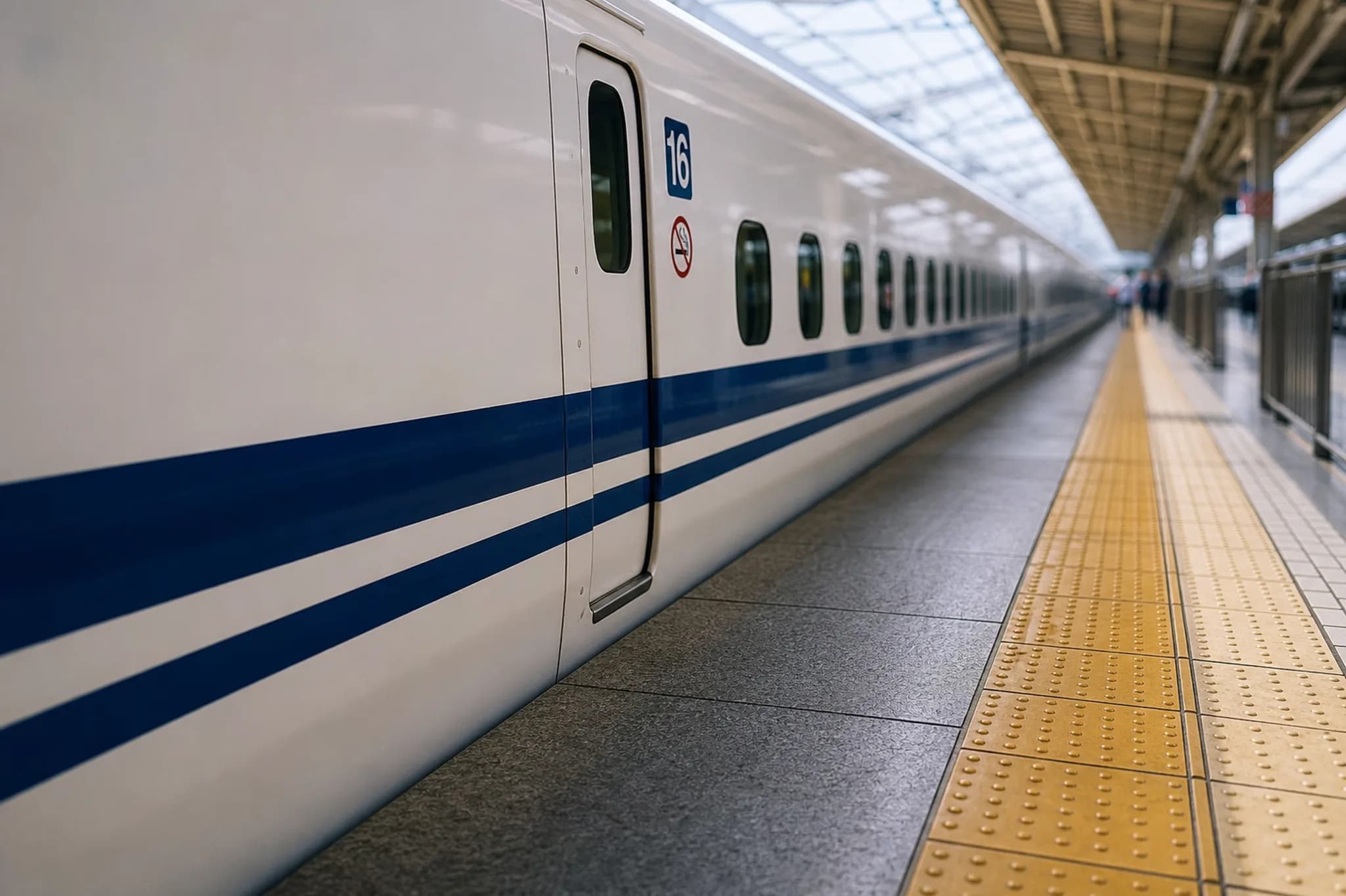
The Shinkansen is impressive because it is fast.
But speed is not its most important quality.
Its real achievement is that speed exists inside a system people can depend on.
A train that occasionally reaches extraordinary speeds is a technical demonstration. A network that carries enormous numbers of passengers safely, predictably, and repeatedly is infrastructure.
That distinction matters far beyond railways.
Technology companies often celebrate maximum capability. The largest model. The fastest benchmark. The most advanced feature. The most dramatic demonstration.
Operational users care about something else.
Will it work tomorrow?
Will it behave consistently under load?
Will someone notice when it stops working?
Will the organisation know what to do next?
Reliability is not merely a technical property. It is a promise made to everyone who organises their life or work around a system.
Once people depend on technology, failure becomes more than an engineering inconvenience.
A delayed internal dashboard may waste an hour. A broken financial workflow may prevent payments. A failed healthcare system may affect treatment. An unreliable artificial-intelligence assistant may quietly introduce errors into hundreds of decisions.
The more useful a system becomes, the greater the responsibility carried by its operators.
The Shinkansen principle is therefore simple:
Do not measure a system only by what it can do. Measure it by how dependably it can continue doing it.
That changes how systems are designed.
Observability stops being optional.
Fallback procedures stop being documentation theatre.
Maintenance receives the same attention as launch.
Capacity planning matters before demand arrives.
Incidents are treated as sources of learning rather than opportunities to assign blame.
Human operators remain part of the architecture.
Reliability also requires restraint. Every new dependency, feature, integration, and provider creates another possible failure path. Capability increases, but so does fragility.
Good engineering is therefore not the pursuit of maximum complexity.
It is the disciplined construction of systems whose promises remain believable.
Speed attracts attention.
Reliability earns trust.
Infrastructure requires both, but only one of them becomes a public promise.