The Study
I explore complex systems, make them understandable, and help build what comes next.

The person
I am an explorer of complex systems — how they fail, how they hold, and how people depend on them without noticing.
I build and advise on technology that should remain controllable: AI under operational ownership, infrastructure with exit options, and decisions boards can defend years later. I write Field Notes from that practice. I am based in Basel and work internationally.
I previously founded and led MachinaLabs AG, a Swiss applied-AI venture that concluded in 2026. That work sharpened how I approach ownership, resilience, and sovereign systems — it is not an active company.
The lens
How the world looks from this desk — not a manifesto, a few working convictions.
Technology should disappear
Understanding should remain. The best systems earn trust by quiet consistency, not by noise.
Preparedness creates resilience
Response time, exit options, and rehearsal matter more than slogans about control.
Ownership creates trust
What you cannot operate, you do not truly own. Critical capabilities stay under operational control.
Systems outlive products
Features fade. Structures, decision rights, and maintainable architecture remain.
Explore before you simplify
Complexity must be observed carefully before it can be reduced honestly. Quiet engineering is the method.
The path
Experiences that shaped the perspective — a selection, not a résumé.
Building and delivery
Started building and selling websites as a teenager; grew through enterprise infrastructure where reliability and governance were not optional.
Infrastructure and sovereignty
Work across platforms, risk architecture, and digital sovereignty — knowing where data lives, who can touch it, and what it costs to leave.
AI and operational ownership
Practical AI adoption, workflow systems, and platform work — including former company-building that ended in 2026 and still informs the Studio’s standards.
Japan and invisible engineering
Travel and Field Notes on technology that works so well people stop thinking about it — railways, craft, and systems that respect those who depend on them.
Writing and exploration
Author of Panopticon 2.0; contributor to the CFA Institute Research & Policy Center; Field Notes published from the Workshop.
Current practice
Advisory work on systems that must remain operable, speaking when clarity helps, and writing in public about ownership and trust.
At the desk
The Workshop sits next door. Paper first. A notebook stays open. A pencil slows the thought until it earns the keyboard. Coffee, sketches, books within reach — sometimes distant trains beyond the window.
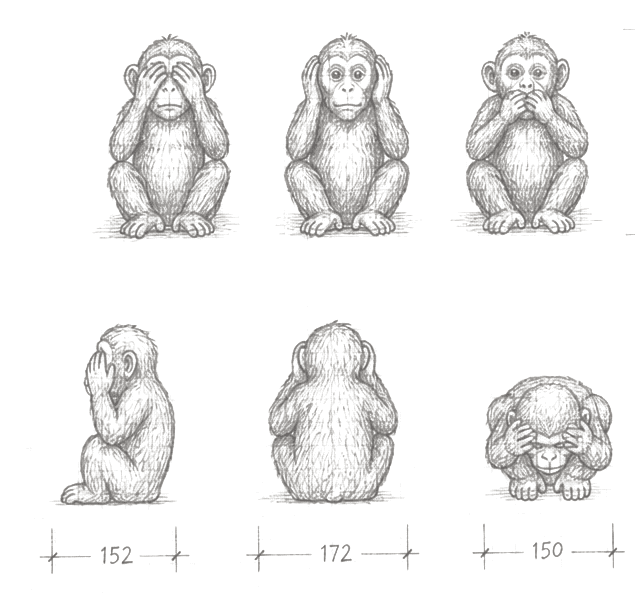
Three wise monkeys remain on the desk. They are not decoration. They are a reminder before anything is built or said:
- Observe carefully.
- Listen carefully.
- Speak carefully.
When the work is ready to leave the desk, it becomes systems, architecture, and Field Notes. Until then, it stays unfinished without shame.