
Swiss banking is still enormously successful.
That is precisely why this article matters.
The sector remains profitable, manages extraordinary amounts of wealth and still benefits from one of the strongest financial brands in the world.
But success can hide strategic decay for a very long time.
Especially when customers are sticky.
Especially when regulation creates friction.
Especially when mortgages, salary accounts, pensions, domestic payment infrastructure and decades of accumulated trust make leaving inconvenient.
That creates a dangerous illusion:
that the customer relationship is strong because the product is strong.
Those are not the same thing.
The gamble Swiss banks are making is that inherited trust, regulatory friction, customer inertia and domestic infrastructure will continue to protect the customer relationship for longer than it takes them to modernise.
And the national-economic risk is larger than whether one foreign fintech gains market share.
Switzerland could remain one of the world's largest banking centres while gradually losing the actual banking product.
The assets could stay here.
The regulated balance sheets could stay here.
The mortgages could stay here.
But the customer interface, product innovation, financial-data relationship, payment frequency and eventually the decision layer could migrate elsewhere.
That is the argument of this volume.
Research note
This volume started with anger.
That is worth stating because anger is not evidence.
Some of my original assumptions did not survive research unchanged.
Swiss banks do have virtual cards. Retail multibanking finally exists. Several Swiss banks now offer direct cryptocurrency custody. TWINT is not a failed payment system. On the contrary, it is one of the most successful domestic payment systems in Europe.
Good.
An argument worth publishing should survive corrections.
The evidence cutoff for this volume is 29 September 2026. Product features are based primarily on bank documentation; sector comparisons on Deloitte, FINMA, SIX, federal authorities and industry data; app reviews are used only as anecdotal signals rather than representative customer research.
The Revolut banking licence has been applied for, not granted.
Likewise, reports that UBS is exploring combinations with foreign banks or reconsidering its Swiss domicile remain reports and strategic warnings, not an announced relocation decision.
With that out of the way, the remaining case is stronger.
The sentence that started this
This morning I saw a LinkedIn post by Christian Dreyer referring to a MoneyToday article about Revolut's attempt to become a Swiss bank.
Its basic point was simple:
Revolut closes much of the remaining gap the day it obtains the local capabilities Swiss customers still expect from their main bank.
The underlying MoneyToday article makes a more nuanced argument. Revolut already has more than 1.3 million customers in Switzerland. Yet Swiss incumbents retain important advantages, especially TWINT, local salary banking, eBill, mortgages, trust and deeply established customer relationships.1
The threat is therefore not necessarily an overnight migration of Swiss deposits.
It is the gradual capture of everyday financial activity.
That distinction matters.
Because the question that interests me is not:
Will Revolut destroy Swiss banking?
That is much too simplistic.
The question is:
How much of Swiss banking's current strength is the result of products customers would actively choose today — and how much comes from infrastructure, switching costs, regulation, history and trust accumulated over generations?
Those things are all valuable.
But they are not the same thing.
And inherited trust is not a product.
Switzerland is very good at banking
This has to be said first.
The idea that Swiss banking is already some decaying economic corpse is nonsense.
In 2025, Swiss banks generated an aggregate CHF 73.8 billion in net income, an all-time high. Sector profit reached CHF 20.6 billion. Assets under management reached CHF 9.73 trillion and passed CHF 10.1 trillion during the first part of 2026. Switzerland remains one of the world's leading cross-border wealth-management centres.2
That is real economic strength.
It is also precisely what makes the technology question so interesting.
Because an organisation can be extraordinarily profitable while becoming strategically less capable.
A strong balance sheet can hide weak product execution for a very long time.
A famous brand can hide it.
Customer inertia can hide it.
A mortgage can hide it.
A salary relationship can hide it.
Domestic payment infrastructure can hide it.
Regulation can hide it.
And an enormous existing pool of assets can hide it.
Success and readiness are not the same measurement.
The digital evidence is uncomfortable
Deloitte's global Digital Banking Maturity study examined 349 banks across 44 markets, including twelve Swiss retail banks representing more than 80 percent of the Swiss market.3
Switzerland ranked fifth when the benchmark began in 2018.
By 2020 it was eighteenth.
By 2024 it was twenty-seventh.
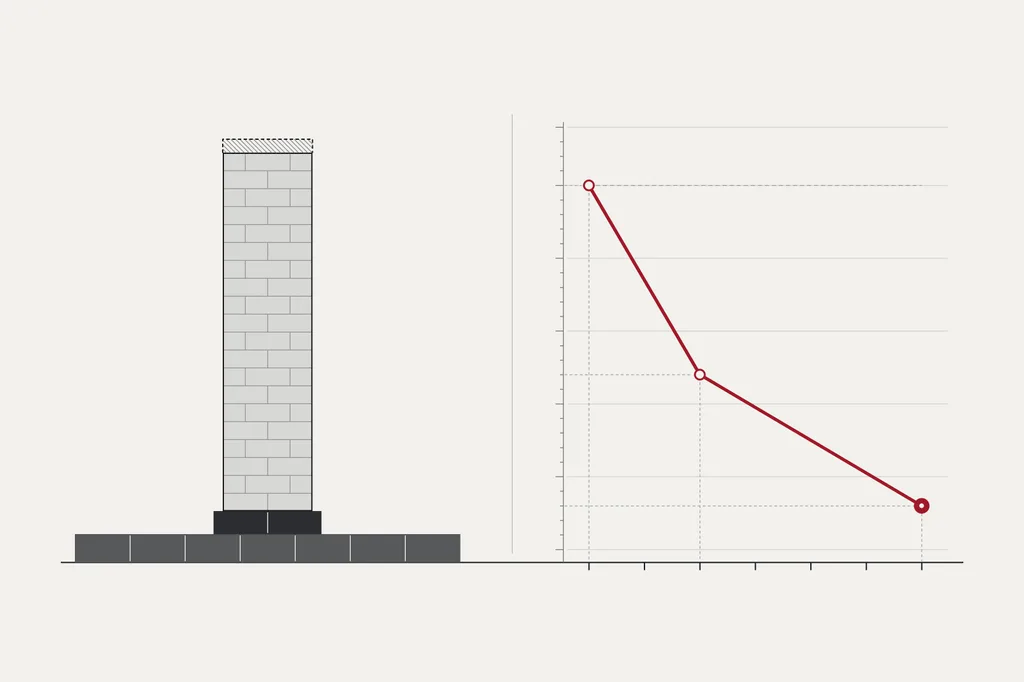
Swiss banks scored 39 on Deloitte's digital maturity index, below the global average of 41 and far behind the digital leaders above 60.
Not one Swiss institution qualified as a Digital Champion.3
That is a rather extraordinary result for one of the richest, most technically capable and financially important countries in the world.
Deloitte's separate 2025 customer-experience research is similarly revealing.
It surveyed 1,250 Swiss retail and private-banking customers.4
Customers were generally satisfied with their banks.
But satisfaction did not translate into enthusiasm.
Only one bank in the study achieved a Net Promoter Score above 50.
It was a neobank.
The best traditional bank scored 39.
The worst scored 11.
Deloitte also found that none of the Swiss banks analysed provided a completely digital end-to-end onboarding experience without media or channel breaks.4
This is probably a more useful description of the problem than saying Swiss customers hate their banks.
Many do not.
They are satisfied.
They are accustomed.
They trust them.
And that may be the dangerous part.
Old technology is not automatically bad technology
I have worked around enough Swiss banking technology to have developed strong opinions about what sits behind some very polished facades.
I have seen systems whose architectural ancestry goes back decades.
Interfaces around interfaces.
Middleware around middleware.
Manual procedures compensating for system boundaries nobody wants to touch.
Processes whose continued existence is explained less by their elegance than by the fact that they still work.
But personal experience is not a representative industry survey.
And there is another distinction worth making:
old does not mean bad.
A stable twenty-year-old system that performs its job reliably, is understood, maintained, tested and well isolated may be less dangerous than a fashionable distributed architecture nobody can reason about.
The problem begins when age turns into dependency.
When nobody knows what breaks if a component changes.
When vendors no longer support it.
When integration becomes slower than the market around it.
When every new product requires another adapter.
When modernising the customer experience means layering one more interface over something nobody dares replace.
FINMA now explicitly lists legacy and end-of-life systems among Swiss financial-sector ICT risks. Its 2024 work had already documented attacks involving obsolete, unmaintained infrastructure and described serious deficiencies in infrastructure lifecycle management at affected institutions.5
So I would no longer describe the problem simply as:
Swiss banks use old technology.
The harder question is:
Can the institution change its technology faster than its environment changes around it?
That is a very different test.
The virtual-card argument already changed
Here is a useful example of why this article needed research rather than nostalgia.
My instinct was to write that Swiss banks still cannot produce virtual cards instantly.
That would have been wrong.
UBS now allows eligible credit-card customers to create an additional virtual credit card in Digital Banking within seconds.6
PostFinance launched its own standalone virtual debit card in June 2026, with an independently configurable limit and the ability to delete it quickly.7
These are meaningful improvements.
But compare the product philosophy.
Revolut has long offered disposable virtual cards designed specifically for higher-risk internet transactions, where card details are automatically changed after use.
UBS' documented virtual product instead behaves essentially like another ordinary reusable credit card without plastic.
That difference looks tiny on a bank's architecture diagram.
To a customer it can be the entire feature.
And this is where I think Swiss banking repeatedly misunderstands digital competition.
The challenger is often not inventing a new financial instrument.
It is removing one small piece of friction.
Then another.
Then another.
Until the accumulated absence of friction becomes the product.
Open Banking finally arrived
Another criticism I had to correct:
Switzerland no longer has no Open Banking.
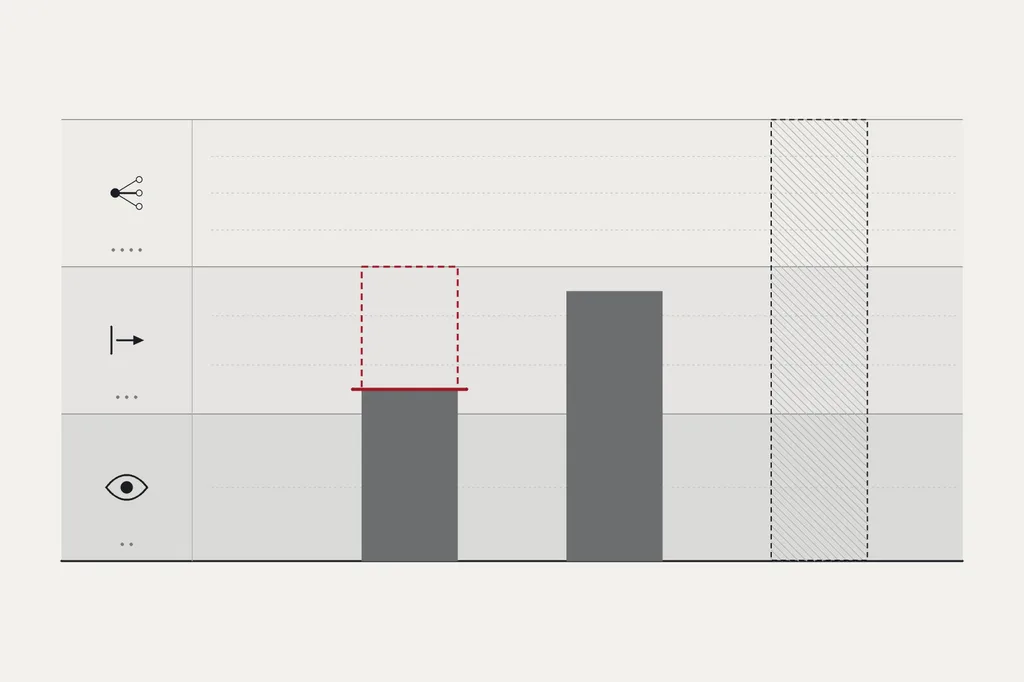
In November 2025, SIX launched retail multibanking through bLink.
At launch, customers could connect accounts across eight banks and two fintechs, while more than thirty banks already supplied the necessary account-data interfaces.8
That is progress.
But look more closely.
Switzerland has intentionally chosen a market-led model rather than the mandatory access regime found in the EU or United Kingdom.
The Federal Department of Finance said in December 2025 that there would, for the time being, be no regulatory obligation forcing financial institutions to expose customer-authorised interfaces.
Its own assessment described progress as mixed and noted continuing problems with third-party access.9
And the customer capability remains limited.
UBS' retail multibanking implementation can show a third-party account's balance and recent transactions.
It cannot currently make a payment from that third-party account.10
That is not nothing.
But it is also not the unified financial control plane many customers imagine when they hear Open Banking.
The international comparison is uncomfortable.
Türkiye's central bank launched version 2 of its national Open Banking services in March 2026, extending account services to card data and transactions and adding scheduled and recurring payment initiation.11
National wealth is clearly not a reliable proxy for banking-interface sophistication.
So the accurate criticism is no longer:
Switzerland has no Open Banking.
It is:
Switzerland arrived late, chose a voluntary architecture, and still offers a patchwork of capabilities where visibility has advanced further than customer control.
That is the argument worth having.
TWINT is simultaneously evidence for and against my argument
TWINT deserves more respect than it sometimes gets.
More than six million people use it regularly.
It processed 901 million transactions in 2025.
More than four out of five Swiss physical shops accept it.12
That is not a fintech failure.
That is an infrastructure success.
But TWINT also reveals something deeply Swiss about the architecture.
Many banks ship their own TWINT application.
Have two bank accounts?
You may install two TWINT apps.
TWINT itself explains how customers can run multiple versions and configure one as the default receiver.13
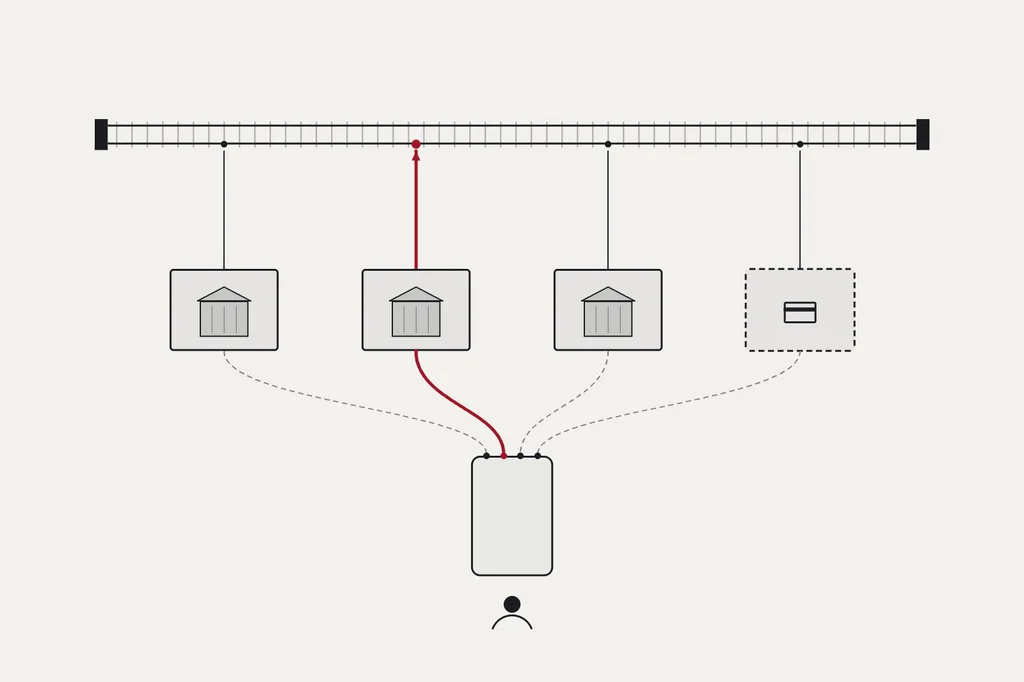
The payment rail is shared.
The customer experience remains institution-centric.
There is almost a metaphor in that.
Switzerland solved the common infrastructure problem brilliantly while preserving the bank as the organising unit of the interface.
For the last decade, that was enough.
The question is what happens when the customer's preferred organising unit becomes something else.
Crypto exposes the same distinction
The lazy criticism would be that Swiss banks do not really offer crypto.
That is also becoming false.
PostFinance customers can now trade and custody 22 cryptocurrencies directly through e-finance and its mobile app.
PostFinance says customers have created more than 36,000 crypto portfolios and completed more than 565,000 trades since launch.14
Zürcher Kantonalbank offers direct trading and custody for Bitcoin, Ethereum, Solana and Chainlink.15
Those are actual cryptocurrencies.
Not simply an ETF with a Bitcoin label.
But ZKB also provides the perfect illustration of where the old architecture meets the new asset.
Its customers cannot currently transfer cryptocurrency into the bank.
They cannot transfer it out.
They cannot use it for payments.
They cannot stake it.15
The blockchain asset exists.
The blockchain's open settlement model does not.
It has been made to behave much more like a traditional security account.

That is not necessarily irrational.
Custody, compliance and operational risk are real.
But it reveals the deeper question:
Is a bank integrating a new financial architecture, or merely importing the new asset into the old one?
Those are different things.
The customer feedback is more nuanced than the rant
App-store reviews do not support the claim that every traditional Swiss bank delivers terrible software.
UBS currently scores around 4.5 on Google Play across almost 90,000 reviews.16
BCV is around 4.6.
ZKB around 4.2.
BLKB around 4.0.
PostFinance sits substantially lower at around 3.4, while AKB is around 2.8.17
Ratings fluctuate and app-store users are not a representative customer sample, but the spread is useful: there are good incumbent experiences and genuinely poor ones.
Several cantonal banks are also acting.
BKB, BLKB, St. Galler Kantonalbank and Thurgauer Kantonalbank announced a shared Avaloq mobile-modernisation programme this year covering roughly one million customers.18
So lazy is probably the wrong analytical word.
I cannot measure laziness.
I can measure execution.
I can measure capability.
I can measure time-to-market.
I can measure interoperability.
And I can observe an industry in which some institutions are moving considerably faster than others despite operating under broadly the same national constraints.
That is more interesting.
Profitability can subsidise slowness
Why would an industry this sophisticated allow itself to fall from fifth to twenty-seventh in a global digital benchmark?
One possible answer is brutally simple.
Because it could.
A bank that is losing its customers immediately feels product failure.
A bank surrounded by long-standing relationships, mortgages, salary accounts, pension products, domestic payment infrastructure, regulatory friction and a globally respected brand can absorb a surprising amount of mediocre execution without immediately losing the relationship.
The P&L still looks healthy.
Assets continue arriving.
Customers complain and stay.
The board sees revenue.
The technology organisation sees another transformation programme.
And another year passes.
That does not prove complacency.
But it creates excellent conditions for it.
It creates what might be called an inertia dividend.
The institution earns an economic return not only from what it builds, but from how difficult, unnecessary or unfamiliar customers perceive leaving to be.

That works beautifully.
Until something changes the switching cost.
Revolut is interesting because it removes excuses
On 16 September 2026, Revolut formally applied to FINMA for a Swiss banking licence.
It says it already serves more than 1.3 million customers in Switzerland and intends to invest more than CHF 150 million locally over five years.19
If approved, its Swiss entity could provide salary accounts, a locally integrated banking relationship, eBill and Swiss deposit protection.
Revolut also says Pillar 3a and TWINT are under consideration.19
The application remains under review.
That does not mean 1.3 million people are about to abandon UBS, PostFinance or their cantonal bank.
MoneyToday's comparison with Ireland is particularly useful here.
Revolut has millions of Irish customers while incumbent banks still retain the vast majority of deposits and new mortgages.1
What changed first was not necessarily the balance sheet.
It was frequency.
Payments.
Cards.
Transfers.
The everyday interface.
That is why I think asking whether Revolut will "take over Swiss banking" is the wrong frame.
The more interesting question is:
Who owns the daily financial relationship?
Because the company that sees where money arrives, where it leaves, what the customer is saving for, which subscriptions exist, where somebody travels, when spending patterns change and which financial decisions are approaching occupies an extraordinarily valuable position.
The balance sheet may remain somewhere else.
The intelligence does not have to.
Banking has a decision layer too
This is where the subject connects to a much larger technological shift.
Banking used to be organised around products.
Account.
Card.
Mortgage.
Brokerage.
Pension.
Increasingly, the customer does not want to operate products.
The customer wants an outcome.
Pay this.
Save enough for that.
Optimise this cash position.
Prepare these taxes.
Move surplus money there.
Protect me from that merchant.
Tell me whether I can afford this.
Soon, many of those intentions will not even originate inside a banking application.
They will originate in personal agents.
Accounting systems.
Commerce platforms.
Business software.
AI interfaces.
The bank risks becoming an execution endpoint behind somebody else's decision layer.
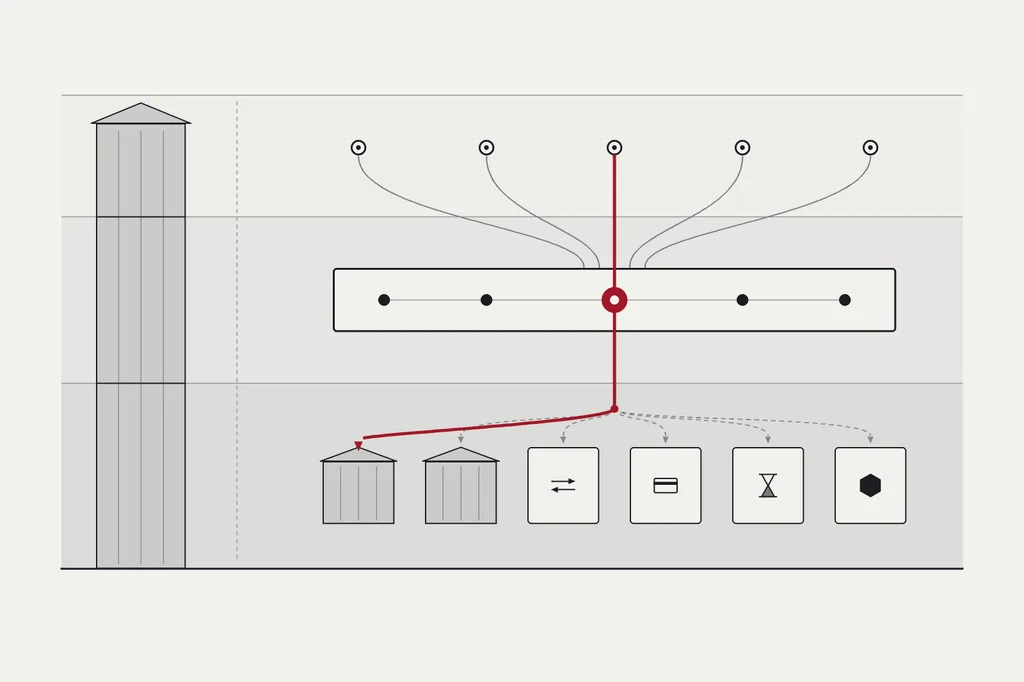
Interestingly, this exact concern surfaced at the Swiss Digital Finance Conference this week.
A MoneyToday report describes PostFinance executives distinguishing between digitising interactions and actually removing the customer's work, and raises the future risk of banks becoming interchangeable execution layers if external agents own the interface.20
That is the real strategic threat.
Not the prettier card.
Not the nicer graph.
Not even Revolut.
Abstraction.
The moment the customer no longer needs to see the bank, the bank's inherited customer relationship becomes substantially less defensible.
And then there is the UBS debate
There is another argument happening in Switzerland at exactly the same time.
Following the collapse of Credit Suisse, Switzerland is redesigning parts of its too-big-to-fail framework.
On 23 September, the Council of States backed a model under which the foreign subsidiaries of a systemically important global bank — effectively UBS today — would have to be backed at 90 percent with CET1 capital.
The Federal Council had proposed 100 percent.
UBS had supported a structure allowing 50 percent CET1 and up to 50 percent AT1.
The legislation now goes to the National Council.21
UBS strongly objects.
It estimates the 90 percent proposal would require another roughly USD 16 billion of CET1 at UBS AG, on top of other regulatory changes and existing requirements following its acquisition of Credit Suisse.
UBS argues the package would materially damage its international competitiveness.22
Its chairman has also warned that sufficiently harsh rules could force the bank to reconsider its Swiss base.
And during the last few days, media reports have described interest from foreign banks in potential combinations with UBS and discussions of ways to reduce the bank's exposure to Swiss regulation.23
UBS has declined to comment on the merger speculation.
Finance Minister Karin Keller-Sutter has publicly argued that leaving Switzerland would probably be more legally complicated and expensive than complying with the proposed rules.23
There are therefore several different questions here, and they should not be collapsed into one.
What level and composition of capital appropriately protects financial stability?
What capital structure allows UBS to compete internationally?
How much systemic risk should remain inside Switzerland?
What would relocation actually mean legally and economically?
Those are legitimate policy questions with competing costs.
They are not answered by whether I like the UBS mobile application.
And product deficiencies do not prove one particular capital regime is correct.
But the two debates intersect at one important point.
Competitiveness cannot mean only the cost of capital.
A financial centre competes through products, infrastructure, technology, talent, trust, regulation, capital efficiency and the ability to execute.
Looking at only one of those variables produces a distorted picture.
Credit Suisse deserves more precision too
It is tempting to tell a simple morality story about Credit Suisse.
Greedy bankers took risks.
The bank collapsed.
The taxpayer rescued it.
Now UBS wants fewer restrictions.
Reality is more complicated.
The Parliamentary Investigation Commission documented years of serious strategic, management, risk and supervisory problems.
It also questioned the effectiveness with which FINMA used its powers and examined a regulatory filter whose effect had risen to CHF 15.3 billion by its first application, materially affecting the appearance of Credit Suisse AG's regulatory capital position.24
So there is no credible one-word explanation for Credit Suisse.
Not greed.
Not regulation.
Not technology.
Not management.
Not FINMA.
It was a system failure containing several of them.
There is also an important factual correction to the popular taxpayer narrative.
The Confederation did assume substantial contingent risk during the 2023 rescue, including a CHF 9 billion loss-protection guarantee and guarantees around up to CHF 100 billion of liquidity assistance.
But those guarantees were terminated in August 2023.
The Confederation ultimately incurred no losses from them and received roughly CHF 200 million in fees and premiums.25
The fact that taxpayers did not ultimately lose money does not mean the public exposure was imaginary.
It means the tail risk did not materialise.
That distinction should matter in the current debate.
Today's news offers another warning
As I write this on 29 September, another Swiss bank is making headlines for a completely different reason.
FINMA has found serious risk-management and anti-money-laundering breaches at Julius Baer involving private-debt exposures of more than CHF 1 billion and relationships with high-risk politically exposed clients.
One exposure ultimately resulted in a CHF 586 million write-down.
FINMA has ordered additional capital of CHF 250 million until specified remediation is complete.26
This has almost nothing to do with virtual cards.
Which is precisely why it belongs here.
A bank is not an app.
Technology quality, customer orientation, capital structure, governance, risk management and institutional competence are different layers of the same system.
A beautiful interface cannot compensate for bad risk governance.
Strong capital cannot compensate indefinitely for disappearing customer relevance.
A trusted brand cannot compensate forever for poor execution.
And innovation theatre cannot repair institutional debt.
The national risk is not that Swiss banks disappear
This is where I think the debate becomes larger than Revolut.

Imagine Switzerland in ten years.
The mortgages are still financed by Swiss banks.
Large pools of global wealth are still booked here.
Capital remains regulated here.
The financial institutions remain profitable.
From a traditional balance-sheet perspective, the financial centre looks healthy.
But imagine that the interfaces through which people actually understand and manage their money belong to foreign platforms.
Their personal financial agent is foreign.
The payment orchestration is foreign.
The data aggregation layer is foreign.
The financial recommendation engine is foreign.
The primary wallet is foreign.
The customer asks that platform which mortgage to buy.
Which pension solution to use.
Where to invest.
How much cash to keep.
Which bank account should execute a payment.
The Swiss bank receives an API instruction.
It performs the regulated transaction.
It earns a smaller margin.
And it never really sees the customer.
Switzerland would still have banks.
But part of banking would have moved somewhere else.
This is the same distinction I keep returning to when writing about digital sovereignty.
Location is not enough.
Ownership is not enough.
Regulation is not enough.
Sovereignty is partly the ability to act, choose, understand, replace and change direction.
A country can host the execution layer while somebody else owns the decision layer.
That is not necessarily catastrophe.
But it is a strategic dependency worth recognising.
The real gamble
So I started this article wanting to call Swiss banks lazy.
After the research, I think that is too easy.
Some are modernising.
Some build excellent products.
TWINT is genuinely successful.
Open Banking has started.
Virtual-card functionality is spreading.
Swiss banks are adopting crypto custody.
Four cantonal banks are jointly rebuilding their mobile layer.
There are serious people inside these institutions who understand exactly what is happening.
The problem is not an absence of intelligence.
The problem is whether the system produces sufficient urgency.
Because Swiss banking has spent decades accumulating something extraordinarily valuable:
trust.
Customers.
Capital.
Infrastructure.
Reputation.
Regulatory legitimacy.
Distribution.
Relationships.
These are formidable competitive advantages.
But every advantage has a failure mode.
The failure mode of accumulated trust is believing that trust eliminates the need to keep earning it.
The failure mode of customer loyalty is mistaking low churn for love.
The failure mode of regulation is confusing a barrier to entry with a product.
The failure mode of infrastructure is assuming yesterday's integration remains tomorrow's moat.
And the failure mode of enormous profitability is believing that today's income statement is evidence about tomorrow's interface.
That is the gamble.
Not that Revolut necessarily wins.
Not that UBS necessarily leaves.
Not that Swiss banking collapses.
The gamble is that there will always be enough time to follow.

The expiry date
For years, being a smart follower was a defensible Swiss banking strategy.
Let somebody else experiment.
Let somebody else spend the money.
Let somebody else discover the regulatory problems.
Then implement the parts customers actually want.
That strategy works when the pioneer still needs your infrastructure to reach your customers.
It becomes much more dangerous when the pioneer already has 1.3 million of them.
A Swiss banking licence would not make Revolut unbeatable.
It would simply remove several excuses.
And that is why Christian Dreyer's little post this morning stuck with me.
The important date is not the date Revolut receives a licence, if it receives one.
The important moment comes when a Swiss customer can choose between two fully localised banking relationships and one of them no longer carries the historical friction that made leaving inconvenient.
Then we get an interesting experiment.
We discover how much of the incumbent relationship was loyalty.
How much was trust.
How much was product quality.
And how much was simply inertia.
A moat can remain profitable long after it stops being defensible.
But once the bridge exists, we finally discover what was on the other side.
Inherited trust is capital.
Mistaking it for a product is how you spend it.
Sources
This volume keeps four things apart: hard factual claims, first-hand experience, interpretation and forward-looking strategic analysis. Product capabilities come primarily from bank and provider documentation and were spot-checked again on 29 September 2026; banking features change quickly. App-store ratings are live, volatile and anecdotal, not representative customer research. Revolut’s Swiss banking licence has been applied for, not granted. Reports of foreign-bank interest in UBS, or of UBS reconsidering its Swiss base, are reported speculation, not an announced transaction or relocation. The additional capital figure for UBS is UBS’s own estimate. The 2023 federal guarantees are described as contingent exposure that ended without realised federal losses. Evidence cutoff: 29 September 2026, Europe/Zurich.
Footnotes
-
MoneyToday, Revolut will Schweizer Bank werden: Heimvorteil der Banken hat ein Ablaufdatum. https://www.moneytoday.ch/news/revolut-will-schweizer-bank-werden-heimvorteil-der-banken-hat-ein-ablaufdatum ↩ ↩2
-
Swiss Bankers Association, Banking Barometer 2026 — Executive Summary, 2026. https://publications.swissbanking.ch/banking-barometer-2026-en/executive-summary ↩
-
Deloitte Switzerland, Digital Banking Maturity Study 2024, 2024. https://www.deloitte.com/ch/en/about/press-room/digital-banking-maturity-study-2024.html ↩ ↩2
-
Deloitte Switzerland, CX Maturity Banking Study, 2025. https://www.deloitte.com/ch/en/Industries/financial-services/research/cx-maturity-banking-study.html ↩ ↩2
-
FINMA, FINMA Risk Monitor 2025, 17 November 2025. https://www.finma.ch/en/~/media/finma/dokumente/dokumentencenter/myfinma/finma-publikationen/risikomonitor/20251117-finma-risikomonitor-2025.pdf ↩
-
UBS, UBS Virtual Credit Card. https://www.ubs.com/ch/en/services/accounts-and-cards/cards/benefits/virtual-card.html ↩
-
PostFinance, For secure online shopping: PostFinance launches virtual debit card with freely selectable limit, 30 June 2026. https://www.postfinance.ch/en/about-us/media/newsroom/virtual-debit-card.html ↩
-
SIX, Launch of Multibanking in Switzerland, 25 November 2025. https://www.six-group.com/en/newsroom/media-releases/2025/20251125-multibanking-launch.html ↩
-
State Secretariat for International Finance (SIF), Open Finance. https://www.sif.admin.ch/en/open-finance-en ↩
-
UBS, Multibanking for private clients. https://www.ubs.com/ch/en/services/digital-banking/digital-services/blink-multibanking.html ↩
-
Central Bank of the Republic of Türkiye, Press Release on Open Banking Services Version 2, March 2026. https://www.tcmb.gov.tr/wps/wcm/connect/EN/TCMB%2BEN/Main%2BMenu/Announcements/Press%2BReleases/2026/ANO2026-13 ↩
-
TWINT, About us. https://www.twint.ch/en/company/about-us/ ↩
-
TWINT, Different versions of the TWINT app. https://www.twint.ch/en/faq/different-versions-twint-app/ ↩
-
PostFinance, PostFinance adds six more cryptocurrencies. https://www.postfinance.ch/en/about-us/media/newsroom/postfinance-adds-six-more-cryptocurrencies.html ↩
-
Zürcher Kantonalbank, Cryptocurrencies. https://www.zkb.ch/en/lps/private/anlagen/cryptocurrencies.html ↩ ↩2
-
Google Play, UBS Mobile Banking, rating and review count as of September 2026. https://play.google.com/store/apps/details?id=com.ubs.swidKXJ.android ↩
-
Google Play, store listings for the BCV, ZKB, BLKB, PostFinance and AKB banking apps, ratings as of September 2026. ↩
-
Avaloq, Four cantonal banks partner with Avaloq to modernize mobile banking, 2026. https://www.avaloq.com/insights/news/four-cantonal-banks-partner-with-avaloq-to-modernize-mobile-banking ↩
-
Revolut, Revolut applies for Swiss banking licence and commits CHF 150 million investment, 16 September 2026. https://www.revolut.com/news/revolut_applies_for_swiss_banking_licence_and_commits_chf_150_million_investment/ ↩ ↩2
-
MoneyToday, Zwischen Bühnen-Euphorie und Boardroom-Bequemlichkeit, September 2026. https://www.moneytoday.ch/news/zwischen-buehnen-euphorie-und-boardroom-bequemlichkeit ↩
-
Swiss Parliament, Council of States news on the too-big-to-fail capital requirements, 23 September 2026. https://www.parlament.ch/fr/services/news/Pages/2026/20260923094552364194158159026_bsf030.aspx ↩
-
UBS, media statement on the banking regulation proposal, 23 September 2026. https://www.ubs.com/global/en/media/display-page-ndp/en-20260923-banking-regulation.html ↩
-
Reuters, Foreign banks have expressed UBS merger interest, Swiss newspaper reports, 27 September 2026. https://www.reuters.com/legal/transactional/foreign-banks-have-expressed-ubs-merger-interest-swiss-newspaper-reports-2026-09-27/ ↩ ↩2
-
Swiss Parliament, Parliamentary Investigation Commission on Credit Suisse, Summary of findings (English). https://www.parlament.ch/centers/documents/en/Zusammenfassung%20Englisch.pdf ↩
-
Federal Department of Finance, UBS / Credit Suisse contracts and guarantees. https://www.efd.admin.ch/en/ubs-cs-contracts ↩
-
FINMA, FINMA concludes enforcement proceeding against Julius Bär, press release, 29 September 2026. https://www.finma.ch/en/news/2026/09/20260929-mm-enforcementverfahren/ See also Reuters, Julius Baer seriously breached risk, money laundering rules, Swiss regulator says, 29 September 2026. https://www.reuters.com/business/finance/julius-baer-seriously-breached-risk-money-laundering-rules-swiss-regulator-says-2026-09-29/ ↩