Reuters schrieb am 27. August 2026, Nvidia habe sich mit Hugging Face auf einen Kauf geeinigt. Preis: 12,9 Milliarden Dollar.
Die Agentur stützte sich auf The Information und auf eine mit der Sache vertraute Person. TechCrunch nahm denselben Bericht auf und ergänzte: Business Insider sprach von Gesprächen, nicht von einem unterzeichneten Vertrag. Die Gespräche könnten noch platzen. Nvidia hat keine Transaktion bekanntgegeben. Hugging Face auch nicht. Im öffentlichen Register blieb das Eigentum, wo es war.
Wer die Meldung liest, denkt zuerst an Macht.
Nvidia beherrscht schon die Hardware, auf der heutige künstliche Intelligenz trainiert und betrieben wird. Dieselbe Firma könnte den Ort kaufen, an dem Entwickler Modelle finden, verteilen, prüfen und in Betrieb nehmen.
Das klingt nach einer weiteren Konzentration in der Branche.
Falls die Meldung stimmt, ist sie das auch.
Sie macht aber etwas sichtbar, das sich schon länger in der KI-Welt eingeschlichen hat.
Offenheit gilt plötzlich als Souveränität.
Das ist sie nicht.
Der Unterschied wird jetzt teuer.
Hugging Face war nie herrenlos
Man könnte so tun, als bekomme die Allmende der offenen Modelle erst jetzt einen Herrn.
Hugging Face war aber nie herrenlos.
Es war immer eine Firma.
Jemand besitzt die Server. Jemand stellt die Leute an. Jemand zahlt die Rechnungen. Investoren halten Anteile. Entscheide über die Plattform fallen in einer Organisation mit Aktionären, Geschäftsleitung, Budget und eigenen Interessen.
Bemerkenswert war nie das Verschwinden von Eigentum.
Bemerkenswert war etwas anderes: Eine Hosting-Plattform im Besitz einer Firma wurde so nützlich, so offen und so vertrauenswürdig, dass ein grosser Teil der Maschinenlernwelt sie behandelte wie eine Allmende.
Forscher legen Modelle dort ab. Firmen verteilen sie dort. Die erste Suche geht dorthin. Datensätze sammeln sich. Anleitungen zeigen dorthin. Bibliotheken hängen direkt daran. Tutorials setzen den Hub voraus. Viele Abläufe beginnen mit einer Modellkennung, die dort liegt.
In der Sommernotiz vom August 2026 schrieb Hugging Face selbst, die öffentlichen Modelle auf dem Hub seien von 2,43 Millionen im Januar auf 2,96 Millionen gewachsen.
Die Nutzungsbedingungen nennen diesen Hub eine Hosting-Plattform von Hugging Face, Inc., einer Gesellschaft nach dem Recht von Delaware. Die Open-Source-Bibliotheken liegen auf GitHub. Das ist ein anderes Ding. Dieselbe Dokumentation erlaubt, ein ganzes Repository in einem bestimmten Stand herunterzuladen, festgemacht an einem vollständigen Commit-Hash.
Eine Allmende braucht keinen fehlenden Eigentümer.
Sammelt sich die Infrastruktur darunter bei wenigen, geht deren Steuerung alle an, die davon abhängen.
Der gemeldete Kauf durch Nvidia erzeugt diese Frage nicht.
Er hängt sie an die Wand.
Das Modell trägt nicht den ganzen Stapel
Viele Organisationen sagen: Wir betreiben offene KI.
Gemeint ist oft dies. Ein Modell mit offenen Gewichten, geholt von Hugging Face, läuft im eigenen Rechenzentrum. Die Eingaben bleiben im Haus. Kundendaten gehen an keine fremde Schnittstelle. Server und Netz gehören der Organisation.
Das ist nicht nichts.
Gegenüber einem externen KI-Dienst ist es ein echter Gewinn an Kontrolle.
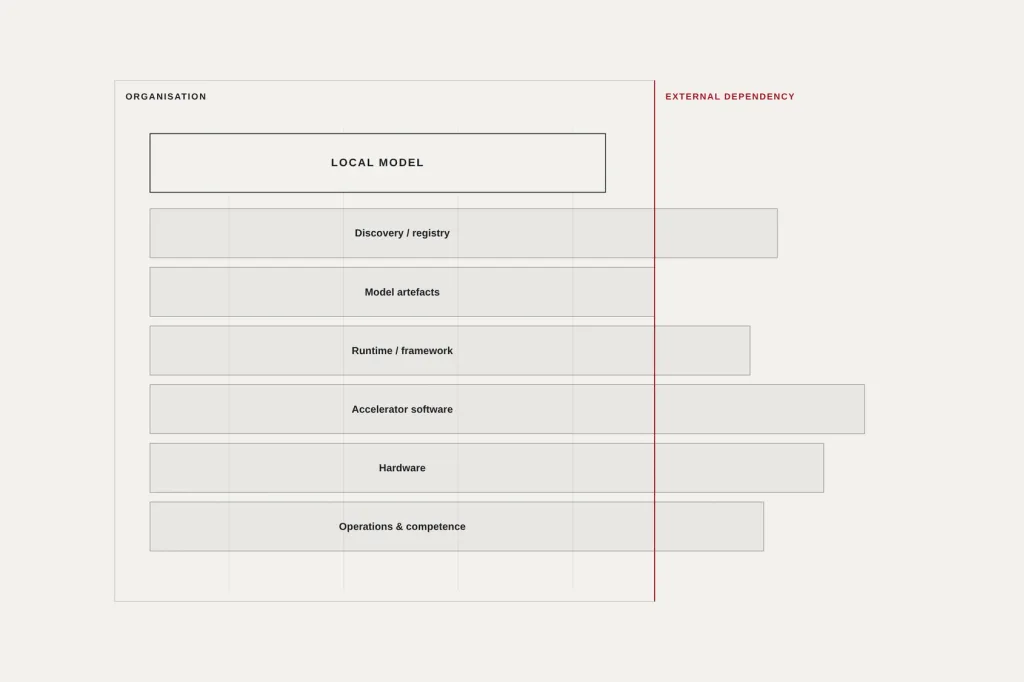
Schaut man genauer hin, bleibt das Modell nur die oberste Lage.
Gefunden wurde es oft über Hugging Face. Gewichte, Tokenizer, Konfiguration, Model Card und zugehöriger Code können dort liegen. Die Software, die das Modell lädt, stammt häufig aus demselben Umfeld. Das Inferenz-Framework bringt Optimierungen für bestimmte Hardware mit. Das System hängt an Treibern von Nvidia. Die Treiber sprechen CUDA. Im Server stecken Beschleuniger von Nvidia. Und die Leute, die den Betrieb kennen, kennen genau diesen Stapel.
Nvidias CUDA-Dokumentation trägt den Titel «Build, tune, and deploy accelerated applications with CUDA.» NVIDIA AI Enterprise ist eine kommerzielle, unterstützte Suite: Microservices, Frameworks, Bibliotheken, GPU-Orchestrierung. Offene Modelle können trotzdem auf einem bezahlten Nvidia-Stapel sitzen.
Nichts an diesem Aufbau ist von vornherein falsch.
Die GPU kann die beste Leistung liefern. CUDA das dichteste Umfeld. Die Anbindung an Hugging Face spart Monate. Das Inferenz-Framework drückt die Kosten. Jede Wahl kann für sich vernünftig sein.
Trotzdem verdichtet sich das Ganze.
Das ist das Problem, das Souveränität geht Optimierung für Optimierung verloren schon beschreibt: Vor Ort vernünftige Entscheide häufen sich, bis dem System als Ganzem weniger glaubwürdige Auswege bleiben, als jeder einzelne Schritt vermuten liess.
Die Abhängigkeit kommt selten als ein Vertrag.
Sie entsteht Wahl um Wahl.
Zugänglich ist nicht offen
Die Wörter hinken hinterher.
Eine KI-Fähigkeit kann für Millionen erreichbar sein und trotzdem geschlossen bleiben.
Eine kommerzielle Schnittstelle gibt Zugang zu einem sehr starken Modell. Besitz folgt daraus nicht. Verständnis der Umsetzung auch nicht. Das Recht, es selbst zu betreiben, erst recht nicht.
Zugängliche KI beantwortet eine Frage:
Kann ich es nutzen?
Die Frage ist berechtigt.
Über Souveränität sagt sie fast nichts.
Und sie zieht den nächsten Schritt nicht nach sich.
Offen heisst nicht, es zu haben
Ein System kann offen heissen und trotzdem ausserhalb der Organisation bleiben, die es braucht.
Der Quellcode liegt öffentlich.
Die Gewichte sind erhältlich.
Die Lizenz erlaubt Änderung und Weitergabe.
Open Source und offene Gewichte sind trotzdem zwei Paar Schuhe. Eine Lizenz auf Software ist keine Lizenz auf Parameter. Und keines von beiden ist eine Hosting-Plattform.
Offenheit ist eine Eigenschaft des Artefakts: rechtlich und technisch.
Sie sagt nicht, dass die Organisation eine eigene Kopie hat, die Abhängigkeiten kennt oder das Können besitzt, das Ding zu halten.
Die Möglichkeit, es zu haben, ist nicht dasselbe wie es zu haben.
Haben ist nicht betreiben
Wer herunterlädt, geht weiter.
Die Werkzeuge von Hugging Face holen, mit vollständigem Commit-Hash, ein ganzes Repository in einem bestimmten Stand und legen die Dateien lokal ab.
Liegen die nötigen Artefakte unter eigener Kontrolle, ändert sich etwas.
Verschwindet das öffentliche Archiv, müssen die Bytes nicht mitverschwinden. Eine rechtmässig behaltene Kopie kann unter ihrer Lizenz weiterleben.
Das trennt herunterladbare Technik von einer Fähigkeit, die nur über eine fremde Schnittstelle existiert.
Gewichte auf einem Datenträger sind trotzdem kein Dienst.
Das Modell braucht Software.
Die Software braucht Abhängigkeiten.
Die Abhängigkeiten brauchen passende Hardware.
Die Hardware braucht Treiber und Firmware.
Und jemand muss wissen, was zu tun ist, wenn es bricht.
Für manche Formen von Souveränität ist Besitz nötig.
Souveränität selbst ist kein Keller voller Dateien.
Sie ist die gehaltene Fähigkeit, sie zu gebrauchen.
Im eigenen Haus ist nicht souverän
Selbsthosting und Souveränität werden oft in einem Atemzug genannt.
Das ist nachlässig.
Selbsthosting fragt:
Wo läuft es?
Souveränität fragt:
Unter wessen Entscheiden läuft es weiter?
Die Fragen überlappen.
Sie fallen nicht zusammen.
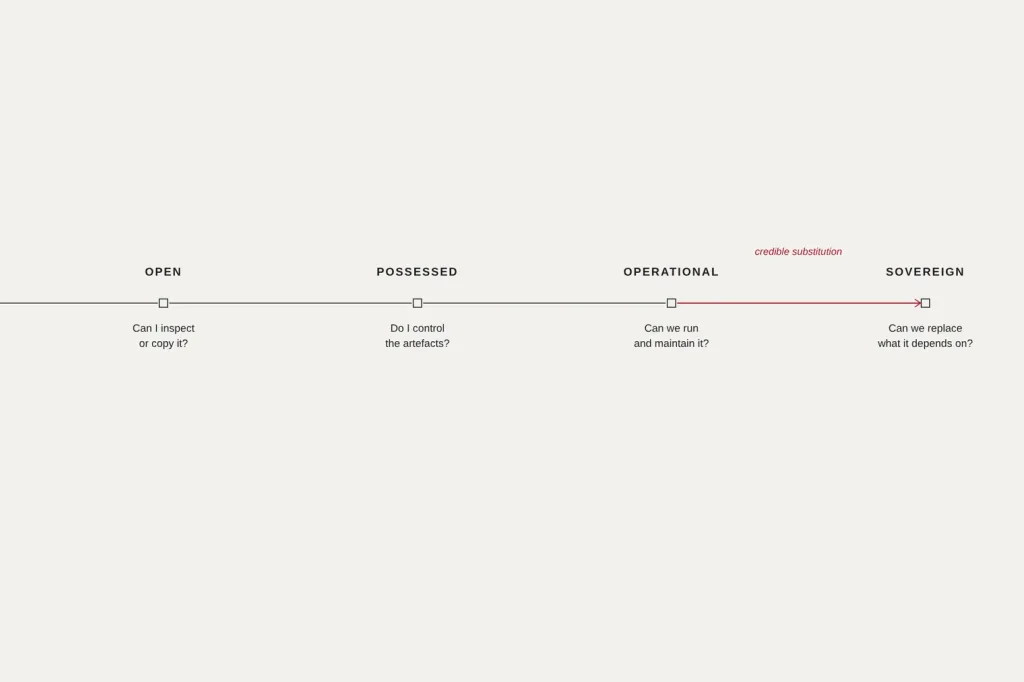
Zugang, Offenheit, Besitz, Betrieb: jede Stufe gibt etwas.
Keine Stufe schenkt die nächste.
Und keine ist Souveränität.
Eine Schweizer Organisation kann ein Modell auf einem Server in Basel betreiben und trotzdem an einer Technikkette hängen, deren kritische Teile im Ausland gesteuert werden.
Ein Staat kann verlangen, dass Daten im Land bleiben, und trotzdem Software fahren, die sich realistisch nicht ersetzen lässt.
Eine Firma kann die Maschinen besitzen und von einer proprietären Beschleunigerarchitektur abhängen.
Lokales Hosting ist deshalb nicht sinnlos. Daten, Gerichtsstand und Betriebskontrolle zählen.
Aber eine fremde Abhängigkeit ins eigene Gebäude zu stellen löscht sie nicht.
Der Standort ist eine Achse. Er ist nicht das Ganze.
Der Widerspruch bei Nvidia
Die Meldung ist deshalb mehr als eine Warnung vor Konzernmacht.
Nvidia kann gute Gründe haben, ein offenes KI-Umfeld zu schonen.
Die grossen geschlossenen Anbieter bauen zunehmend eigene Beschleuniger, suchen andere Rechenarrangements und wollen weniger von Nvidia abhängen.
Offene Modelle schaffen einen anderen Markt. Tausende Organisationen laden ein Modell und betreiben es selbst — und diese Organisationen brauchen Hardware.
TechCrunch hat dieselbe strategische Lesart angeboten: ein lebendiges Umfeld offener Modelle gibt Kunden Alternativen zu geschlossenen KI-Labors und hält zugleich mehr KI-Last an Beschleunigerhardware gebunden. Das ist Analyse, nicht die von Nvidia genannte Begründung. Hugging Face selbst hat Anfang August festgehalten, AMD und Nvidia gehörten zu den produktivsten Herausgebern neuer offener Modelle, und hat den kommerziellen Zusammenhang zwischen offenen Modellen und Chipnachfrage notiert.
Daraus folgt ein Widerspruch, der keiner ist.
Offene KI kann stärker werden, während KI-Souveränität schwächer wird.
Mehr Modelle zum Herunterladen. Mehr Software. Billigere Inferenz. Leichterer Betrieb im Haus.
Und gleichzeitig legen sich mehr dieser Tätigkeiten um ein Hardware- und Software-Umfeld.
Offenheit und Konzentration können denselben Weg gehen.
Die nützliche Frage lautet nicht, ob Nvidia Open Source guttut.
Sie lautet: Wie viel bleibt ersetzbar, wenn Nvidia an jeder Schicht die vernünftige Wahl ist?
Der bequeme Weg zieht an
Konzentration braucht selten ein Verbot.
Der bequeme Weg reicht.
Man sucht Modelle dort, wo alle suchen. Der einfachste Weg in den Betrieb ist auf einen Beschleuniger hin gebaut. Die Anleitung zeigt eine Laufzeit. Der Vergleichstest benutzt einen Satz Bibliotheken. Der bequemste gehostete Endpunkt liegt im selben Umfeld. Support für Unternehmen gibt es dort. Die Kollegen kennen es. Das letzte Projekt hat es benutzt. Die Beschaffung hat es schon freigegeben. Also nimmt das nächste System denselben Weg.
Niemand muss AMD verbieten. AMD ist bereits auf dem Hub: die Firma dokumentiert ROCm und veröffentlicht Modelle. Der Hub ist heute kein Tor nur für Nvidia.
Das Risiko braucht keine Sperre konkurrierender Laufzeiten. Eigentum zählt schon, weil Integrationen, Dokumentation, Optimierung und Geld allmählich festlegen, welcher Weg der leichte ist.
Der andere Weg wird ein wenig unbequemer.
Dann unüblicher.
Dann schlechter verstanden.
Dann seltener geprüft.
Am Ende steht die Alternative noch auf dem Papier. Im Betrieb nicht mehr.
Technologische Souveränität verschwindet oft so. Nicht weil jemand sie verbietet. Weil alles den leichten Weg hinabgleitet.
Die stärkste Plattform zieht Anbindungen an. Anbindungen ziehen Entwickler. Entwickler erzeugen Wissen. Wissen senkt das Risiko. Geringeres Risiko holt Kunden. Kunden rechtfertigen mehr Optimierung. Optimierung stärkt die Plattform. Was als gute technische Wahl begann, wird zur stillen Voraussetzung.
Voraussetzungen sieht man zuletzt.
Der Katalog ist Infrastruktur
GitHub ist nützlich.
Reife Organisationen bauen den Produktionsstart trotzdem nicht darauf, dass ein öffentliches Repository in genau diesem Augenblick erreichbar ist.
Containerkataloge und Paketquellen behandelt man gleich. Kritische Artefakte werden festgenagelt, zwischengespeichert oder gespiegelt. Produktion entsteht aus bekannten Eingaben, nicht aus dem, was das Netz gerade als neueste Version ausgibt.
Mit Modellen gehört es jetzt ebenso.
Ein öffentlicher Modell-Hub ist ein ausserordentlicher Verteiler.
Er gehört nicht automatisch in die Laufzeit.
Das souveräne Muster ist schlicht:
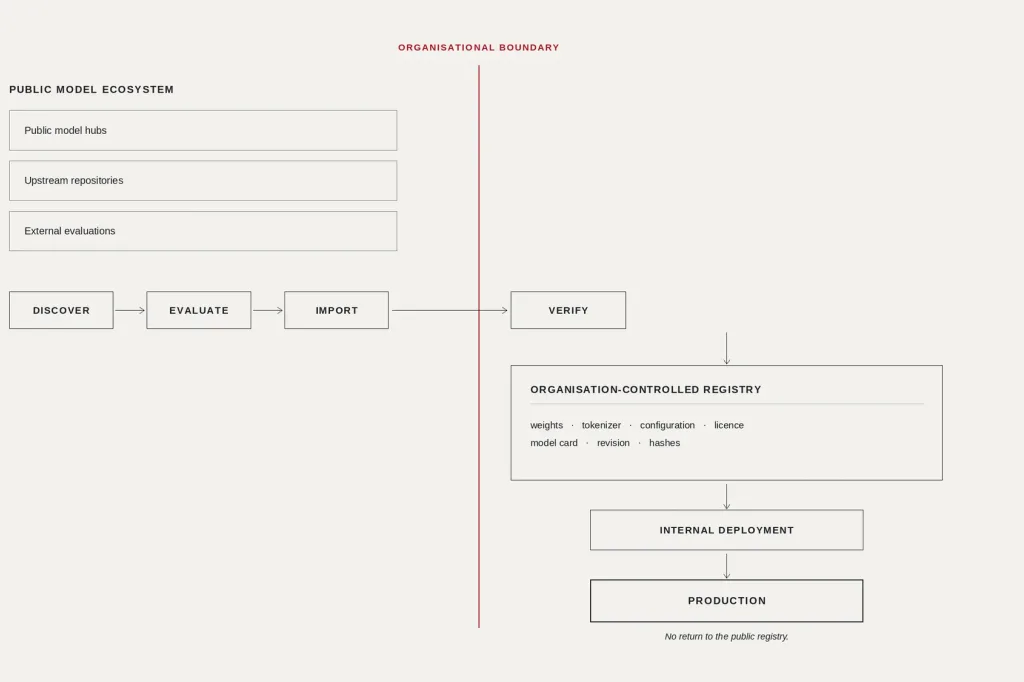
draussen finden mit Absicht prüfen bewusst hereinholen lokal nachweisen unabhängig betreiben
Was von Hugging Face gewählt wurde, soll eine Organisationsgrenze passieren.
Drinnen muss klar sein, was hereinkam: Gewichte, Konfiguration, Tokenizer, nötiger Code, Lizenz, Model Card, Stand, Hashes, Prüfungen, Sicherheitshinweise, Laufzeit und Hardware.
Danach muss sich die Bereitstellung wiederholen lassen, ohne das öffentliche Register zu fragen, welche Version gerade gilt.
Die Werkzeuge von Hugging Face machen das Herunterladen eines bestimmten Stands schon möglich. Die Technik für eine solche Grenze existiert.
Oft fehlt nicht das Werkzeug.
Es fehlt der Entwurf.
Eine souveräne Lieferkette für Modelle
Die Lieferkette für Modelle sollte der Lieferkette reifer Software ähneln.
Woher stammt das Modell? Welcher genaue Stand? Welche Lizenz? Was geschieht, wenn das Archiv stromaufwärts verschwindet?
Das sind gewöhnliche Fragen. Bei Bibliotheken und Containern hat die Branche sie gelernt. KI-Systeme verdienen dieselbe Strenge.
Europa sollte das Wort souverän sparsamer gebrauchen
Europa hat ein verständliches Interesse an souveräner KI.
Der Begriff sitzt in Parteiprogrammen, Cloud-Strategien, Rechenzentrumsprojekten, Beschaffung und Industriepolitik.
Gefährlich wird er, wenn souveräne KI nur noch Geografie meint.
Ein Modell, das in der Schweiz läuft, ist nicht automatisch schweizerische souveräne KI.
Ein europäisches Rechenzentrum kann weiter an Modellen, Beschleunigerstapeln, Software, Archiven und Betriebskönnen hängen, die vor allem ausserhalb Europas gesteuert werden.
Für Recht, Datenschutz oder Betrieb kann das trotzdem der richtige Aufbau sein.
Dann soll man aber sagen, was man hat: Datenresidenz, gerichtliche Kontrolle, Unabhängigkeit von einem SaaS-Anbieter, Inferenz im Haus. Das sind keine Kleinigkeiten.
Nennt man sie vollständige technologische Souveränität, werden die restlichen Abhängigkeiten unsichtbar.
Souveränität verlangt nicht, dass Europa Transistor, Compiler, Framework, Modell, Cloud und Bibliothek innerhalb der eigenen Grenzen neu erfindet.
Das wäre keine Ingenieuraufgabe mehr, sondern die Fantasie der Selbstversorgung. Souveränität ist nicht Selbstversorgung hat diese Fantasie schon zurückgewiesen.
Das Ziel ist nicht Isolation. Es ist steuerbare wechselseitige Abhängigkeit — der Unterschied, den Digitale Souveränität ist nicht Nationalismus schon verlangt.
Ausländische Lieferanten vertragen sich mit Souveränität.
Unersetzbare Lieferanten sind der Beginn des Problems.
Der Ersatztest
Daraus folgt ein brauchbarer Massstab.
Eine souveräne KI-Architektur bewertet man nicht danach, ob sie offen ist.
Auch nicht danach, ob sie lokal ist.
Auch nicht danach, ob der Server der Organisation gehört.
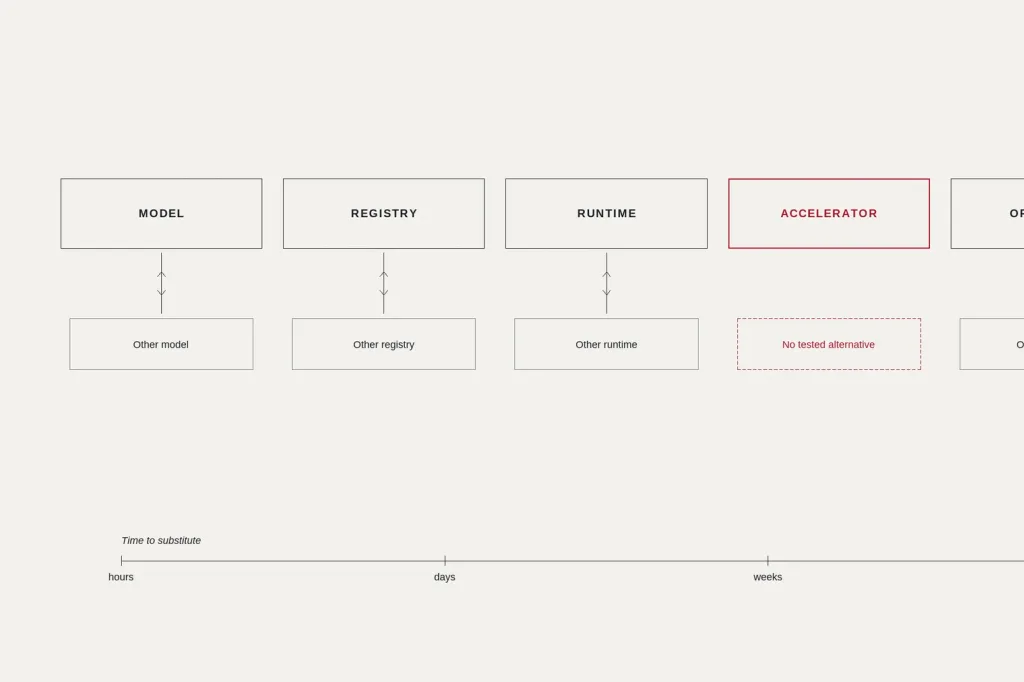
Man fragt, wie ersetzbar jede kritische Schicht bleibt.
Kann das Modell ersetzt werden?
Kann der Modellkatalog ersetzt werden?
Kann die Inferenz-Laufzeit ersetzt werden?
Kann der Beschleuniger ersetzt werden?
Kann die Cloud ersetzt werden?
Kann die Orchestrierung ersetzt werden?
Kann der Identitätsanbieter ersetzt werden?
Kann die Organisation das System ohne den ursprünglichen Integrator wiederherstellen?
Kann ein anderes Team verstehen, wie es funktioniert?
Wie lange würde der Austausch dauern?
Wie viel Fähigkeit ginge im Übergang verloren?
Wie viele Alternativen sind wirklich geprüft worden?
Das ist dieselbe Strenge wie Der Exit-Test, angewendet auf künstliche Intelligenz.
Eine theoretische Alternative reicht nicht.
Ein README, das ein anderes Backend erwähnt, reicht nicht.
Eine Abstraktion, die niemand geübt hat, reicht nicht.
Ein Beschaffungsblatt mit dem Wort Portabilität reicht nicht.
Ersetzbarkeit muss den Betrieb überstehen.
Die härteste Abhängigkeit ist Können
Eine Schicht bleibt in diesen Debatten regelmässig unterschätzt: die Leute.
Eine Organisation kann jedes Modell spiegeln, jeden Container halten, mehrere Beschleuniger-Backends pflegen und jeden Server besitzen.
Den Test verfehlt sie trotzdem, wenn nur eine externe Beratung weiss, wie das System wirklich läuft.
Oder wenn intern nur das Werkzeug eines Anbieters sitzt.
Oder wenn seit drei Jahren niemand die Umgebung neu aufgebaut hat.
Oder wenn Artefakte da sind und das Wissen nicht.
Technologische Souveränität ist darum auch Gedächtnis einer Institution.
Sie lebt in der Dokumentation.
In Ablaufbüchern.
In Proben.
Im Betriebspersonal.
Im Verständnis der Architektur.
Im Wissen der Beschaffung.
Im Sicherheitskönnen.
In der Zuversicht, eine andere Wahl zu treffen.
Ein System ist nicht souverän, wenn die Organisation, die es fährt, es nicht mehr ändern kann.
Die Abhängigkeit sitzt dann nicht im Rechenzentrum.
Sie sitzt in den Köpfen.
Was, wenn Hugging Face morgen verschwände?
Ein Gedankenexperiment hilft.
Nicht weil Hugging Face verschwinden wird. Nicht weil Nvidia als Feind gelten soll. Die Absicht gehört nicht in die Frage.
Angenommen, huggingface.co ist morgen für die eigene Organisation unerreichbar.
Steht die Produktion?
Wenn nicht: gut.
Lässt sich jedes kritische Modell neu aufsetzen?
Lässt sich die Laufzeit wiederherstellen?
Hat man Konfiguration und Tokenizer?
Kann man die Lizenz zeigen, unter der das Modell geholt wurde?
Lässt sich der genaue Stand wiederholen?
Kann das eigene Team ihn betreiben?
Nun nimmt man Nvidia weg.
Wieder nicht, weil Nvidia verschwinden soll. Lieferung kann stocken. Eine Beschaffungsregel kann kippen. Die Organisation kann selbst gehen wollen.
Was bleibt von der Architektur?
Welche Software muss wechseln?
Welche Modelle werden unbrauchbar?
Welche Optimierungen stecken unsichtbar im System?
Wie lange dauert es bis zum normalen Betrieb?
Diese Antwort sagt mehr über KI-Souveränität als jede Adresse eines Rechenzentrums.
Offenheit zählt trotzdem
Gegen offene KI spricht das nicht.
Im Gegenteil.
Offene Software und herunterladbare Gewichte schaffen etwas, das geschlossene Dienste grundsätzlich nicht hergeben.
Sie machen Prüfung, Bewahrung, eigenen Betrieb, anderes Hosting und Forks möglich. Eine Gemeinschaft kann weiterarbeiten, auch wenn die Ursprungsfirma den Kurs wechselt.
Das ist viel.
Darauf lässt sich Souveränität bauen.
Es sind Zutaten.
Es ist nicht das fertige Haus.
Der Vorzug offener Technik liegt nicht darin, dass Souveränität von allein eintritt.
Sie macht Souveränität möglich.
Ob Organisationen die Möglichkeit nutzen, ist eine andere Frage.
Schluss
Der gemeldete Kauf von Hugging Face durch Nvidia interessiert, weil er etwas ändern könnte.
Wichtiger ist, was er sichtbar macht.
Jahrelang galten offene Modelle als Beweis, technologische Macht verteile sich.
In einem Sinn tut sie das.
Was früher den Zugang zu einer Handvoll Labors brauchte, laden und betreiben heute Tausende Organisationen.
Das ist eine echte Umverteilung von Fähigkeit.
Die Verteilung von Dateien ist aber nicht automatisch die Verteilung von Kontrolle.
Hardware kann sich sammeln. Ebenso Laufzeiten, die Suche nach Modellen, die Verteilung, das Betriebswissen. Das entstehende System kann Millionen frei herunterladbarer Dateien enthalten und trotzdem strukturell von sehr wenigen Institutionen abhängen.
Das System bleibt dabei offen.
Es macht nur den Abstand zwischen Offenheit und Souveränität unübersehbar.
Offen heisst: wir dürfen es prüfen.
Offen kann heissen: wir dürfen es ändern.
Offen kann heissen: wir dürfen es kopieren.
Offen kann heissen: wir dürfen es selbst laufen lassen.
Souveränität fragt nach dem Danach.
Können wir es halten?
Können wir es betreiben?
Können wir es reparieren?
Können wir die Infrastruktur darunter ersetzen?
Können wir einen anderen Lieferanten wählen?
Können wir weiterarbeiten, wenn der Eigentümer die Strategie dreht?
Können wir gehen?
Das ist der härtere Massstab.
Für die nächste Generation der KI-Infrastruktur folgt daraus ein einfacher Grundsatz:
Souveränität misst man nicht am Standort des Modells.
Man misst sie daran, wie viele Eigentümer verschwinden können, bevor die Fähigkeit mit ihnen verschwindet.
Offen ist wertvoll.
Offen ist nötig.
Offen ist nicht souverän.
Quellen
Das gemeldete Geschäft
- Reuters, Nvidia agrees to buy Hugging Face for $12.9 billion, The Information reports, 26.–27. August 2026. https://www.reuters.com/technology/nvidia-talks-acquire-hugging-face-13-billion-deal-business-insider-reports-2026-08-27/
- The Information, Nvidia Agrees to Buy Open Source Model Repository Hugging Face For $12.9 Billion (hinter einer Bezahlschranke; von Reuters mit einer mit dem Geschäft vertrauten Person zitiert). https://www.theinformation.com/articles/nvidia-agrees-buy-open-source-model-repository-hugging-face-12-9-billion
- Connie Loizos, TechCrunch, Nvidia closes in on Hugging Face acquisition, 26.–27. August 2026. Dieselbe Behauptung von The Information; merkt an, Business Insider habe von Gesprächen gesprochen, nicht von einem unterzeichneten Vertrag, der noch scheitern könne. Strategische Lesart eines gemeldeten Geschäfts: offene Modelle als Alternativen zu geschlossenen Labors, die mehr KI-Last an Beschleunigerhardware binden. Analyse, keine Aussage von Nvidia. https://techcrunch.com/2026/08/26/nvidia-closes-in-on-hugging-face-acquisition/
- Am Abend des 27. August 2026 in Zürich veröffentlichte der Newsroom von Nvidia andere Stücke, darunter Material zu AWS-GPUs und zur Finanzgemeinde. Eine Bekanntgabe eines Kaufs von Hugging Face erschien dort nicht. Der Blog von Hugging Face veröffentlichte keinen Beitrag zu einem Kauf. Keine der beiden Firmen hatte eine Bestätigung, ein Dementi oder eine Notiz zur Steuerung veröffentlicht. Im öffentlichen Register blieb das Eigentum, wo es war.
Hugging Face als Firma und als Hub
- Hugging Face, Terms of Service, wirksam ab 15. September 2022: Hugging Face, Inc., eine Gesellschaft nach dem Recht von Delaware; der Hub ist eine Hosting-Plattform; die Bibliotheken sind ein getrenntes Set auf GitHub; die Firma darf den Vertrag abtreten. https://huggingface.co/terms-of-service
- Dokumentation des Hugging Face Hub, Download files from the Hub:
snapshot_download()lädt ein ganzes Repository in einem bestimmten Stand herunter; ein Commit-Hash muss der vollständige Hash sein. https://huggingface.co/docs/huggingface_hub/en/guides/download - Hugging Face, State of Open Models — Summer 2026, 14. August 2026: öffentliche Modelle 2,43 Millionen im Januar auf 2,96 Millionen; AMD und Nvidia unter den produktivsten Herausgebern neuer offener Modelle; kommerzieller Zusammenhang zwischen offenen Modellen und Chipnachfrage. https://huggingface.co/blog/state-of-open-models-summer-2026
- TechCrunch, Kyle Wiggers, Hugging Face raises $235M, 24. August 2023 (Nvidia und AMD als Teilnehmer der Series D; keine Quelle für das Geschäft von 2026). https://techcrunch.com/2023/08/24/hugging-face-raises-235m-from-investors-including-salesforce-and-nvidia/
Nvidia in eigenen Worten
- NVIDIA, CUDA Toolkit Documentation. https://docs.nvidia.com/cuda/
- NVIDIA, NVIDIA AI Enterprise. https://www.nvidia.com/en-us/data-center/products/ai-enterprise/
Verwandte Bände
- Digitale Souveränität ist nicht Nationalismus
- Souveränität ist nicht Selbstversorgung
- Souveränität geht Optimierung für Optimierung verloren
- Der Exit-Test
Dieser Band erörtert ein gemeldetes Geschäft, das keine der beiden Firmen zum Zeitpunkt des Schreibens bestätigt hatte. Er behauptet nicht, das Geschäft sei abgeschlossen. Er ist keine Rechtsberatung.